Loading bill breakdown…
S. 98119th CongressScience, Technology, Communications
Rural Broadband Protection Act of 2025
Sponsored by Sen. Shelley Moore Capito (R-WV) · 4 active : 1 Republican, 3 Democrats
Latest action: Became Public Law No: 119-89.
Where it standsBecame law6 senators score as swing votes
Became law
- Senate: passedJun 26, 2025
- House: passedApr 20, 2026
- President: Signed into lawMay 11, 2026
Summary
, via Congress.govRural Broadband Protection Act of 2025
This act requires the Federal Communications Commission (FCC) to vet the qualifications of applicants for certain funding programs that support affordable broadband deployment in high-cost areas (e.g., rural communities).
Read full summaryHide full summary
Specifically, the FCC must develop a vetting process for applicants seeking funding under high-cost universal service programs for the deployment of a broadband-capable network and the provision of supported services over the network. The FCC must require applicants to submit a proposal that contains sufficient detail and documentation for the FCC to ascertain that the applicant possesses the technical, financial, and operational capabilities related to the proposed deployment and has a reasonable business plan. The FCC must evaluate applications against reasonable and well-established standards and must consider each applicant’s history of compliance with the requirements of other government broadband funding programs.
The FCC must establish this vetting process through a rulemaking proceeding. After the rule is finalized, funds may only be awarded to applicants that satisfy the standards established therein.
Finally, the FCC must set financial penalties for applicants that default in some manner during the evaluation process before they are authorized to begin receiving support.
How the projections held up
Each member’s recorded vote compared with their swing projection from before the vote. A member by voting against most of their own party.
House
Passed by voice vote or unanimous consent: no individual votes recorded.
Senate
Passed by voice vote or unanimous consent: no individual votes recorded.
Committees and subjects
Committees
- Senate Committee on Commerce, Science, and Transportation · SenateReported by · Markup by · Referred to
Subjects
- Internet, web applications, social media
- Rural conditions and development
- Telephone and wireless communication
Model
Directional: count only breaks toward the other partyWhy do scores change?v3default (selected)v2 model swing-v2
How the Senate breaks down
- 6Swing 70–100
- 68Middle 30–70
- 26Entrenched 0–30
Members fall into . All 100 senators have enough data to score.
Key players in the Senate
Ranked by swing score, 0–100 · swing-v3Bars show each input from 0 to 100: ideology gap, scorecard gap, , and the . is the seat’s partisan lean, and shows how much of the input data a score has.
- 1
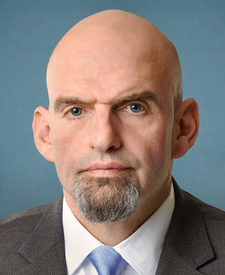 John FettermanDemocrat · Pennsylvania · Lean R+1Senate Committee on Commerce, Science, and Transportation
Similar past votes, Senate
Earlier behind swing-v3’s inputLoading similar votes
Cosponsors
4 activeShow all 4 cosponsors
- Amy Klobuchar (D-MN)
- John R. Curtis (R-UT)
- Gary C. Peters (D-MI)
- Raphael G. Warnock (D-GA)
How the swing score works
Ideology gapHow far a member’s DW-NOMINATE voting score sits from their party’s median in the same chamber.
Scorecard gapHow far their Heritage Action and LCV ratings stray from their party’s average, using the groups’ votes on similar bills where available.
Cross-pressureHow strongly their district or state leans toward the other party, from our own computed partisan lean.
Similar votesHow often they voted against their own party on earlier roll calls about this bill or similar ones.
Committee bonusMembers of the committees handling the bill decide whether it moves, so they get a boost.
Cosponsor checkThe sponsor and active cosponsors have already committed, so they drop toward entrenched.