Loading bill breakdown…
Loading bill breakdown…
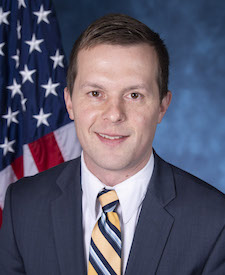
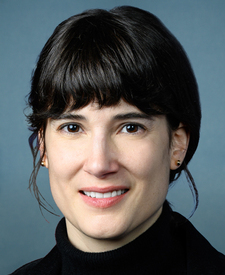
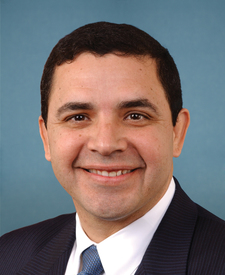
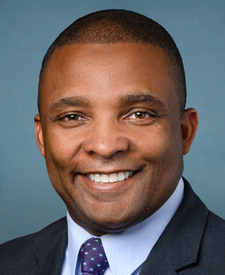
Sponsored by Sen. Shelley Moore Capito (R-WV) · 4 active : 1 Republican, 3 Democrats
Latest action: Became Public Law No: 119-89.
Rural Broadband Protection Act of 2025
This act requires the Federal Communications Commission (FCC) to vet the qualifications of applicants for certain funding programs that support affordable broadband deployment in high-cost areas (e.g., rural communities).
Specifically, the FCC must develop a vetting process for applicants seeking funding under high-cost universal service programs for the deployment of a broadband-capable network and the provision of supported services over the network. The FCC must require applicants to submit a proposal that contains sufficient detail and documentation for the FCC to ascertain that the applicant possesses the technical, financial, and operational capabilities related to the proposed deployment and has a reasonable business plan. The FCC must evaluate applications against reasonable and well-established standards and must consider each applicant’s history of compliance with the requirements of other government broadband funding programs.
The FCC must establish this vetting process through a rulemaking proceeding. After the rule is finalized, funds may only be awarded to applicants that satisfy the standards established therein.
Finally, the FCC must set financial penalties for applicants that default in some manner during the evaluation process before they are authorized to begin receiving support.
Members fall into . 6 representatives don’t have enough data yet and are marked “insufficient data”. Non-voting delegates are not counted. The bill is not before the House right now; these scores show where members would stand.
Bars show each input from 0 to 100: ideology gap, scorecard gap, , and the . is the seat’s partisan lean, and shows how much of the input data a score has.
Loading similar votes
These members have less than half of the model’s inputs, so their scores are not banded or ranked.


Ideology is each member’s score. The most moderate members of each party sit nearest the center line and highest on the chart. 6 representatives without a DW-NOMINATE score or with insufficient data are not plotted.
Similar votes count toward swing-v3 in the House: total similarity weight 5.5 (needs 5.0).