Loading bill breakdown…
1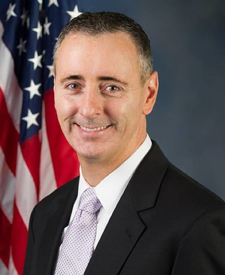
Brian K. FitzpatrickRepublican · Pennsylvania 1st · Lean D+1House Committee on Ways and MeansOn the ballot
Loading bill breakdown…
Sponsored by Rep. Mike Carey (R-OH) · 6 active : 4 Republicans, 2 Democrats
Latest action: Received in the Senate and Read twice and referred to the Committee on Finance.
New Opportunities for Business Ownership and Self-Sufficiency Act
This bill increases the percentage of individuals who may participate in a Self-Employment Assistance (SEA) program, generally expands eligibility for such programs, and modifies certain SEA program requirements.
As background, an SEA program provides an individual with an SEA allowance, rather than regular unemployment compensation benefits, if such individual is (1) eligible for unemployment compensation benefits and identified as likely to exhaust such benefits, (2) participating in self-employment assistance activities which include entrepreneurial training, business counseling, and technical assistance and are approved by the state, and (3) working full-time on establishing a business and becoming self-employed. Under current law, the number of individuals participating in an SEA program may not exceed 5% of the individuals receiving regular unemployment compensation benefits in the state.
The bill
increases the percentage of individuals who may participate in a state SEA program to 10%,
eliminates the requirement that an individual be determined likely to exhaust unemployment compensation benefits (generally expanding individual eligibility for an SEA program), and
requires individuals to certify (at least weekly) that they are working full-time on establishing a business and becoming self-employed.
Finally, the bill allows individuals to meet the requirement to participate in state-approved self-employment assistance activities if such activities either (1) include entrepreneurial training, business counseling, and technical assistance (permitted under current law); or (2) are performed pursuant to a state-approved business plan and market feasibility study.
Each member’s recorded vote compared with their swing projection from before the vote. A member by voting against most of their own party.
Passed by voice vote or unanimous consent: no individual votes recorded.
Members fall into . 6 representatives don’t have enough data yet and are marked “insufficient data”. Non-voting delegates are not counted. The bill is not before the House right now; these scores show where members would stand.
Bars show each input from 0 to 100: ideology gap, scorecard gap, , and the . is the seat’s partisan lean, and shows how much of the input data a score has.
Loading similar votes
These members have less than half of the model’s inputs, so their scores are not banded or ranked.


Ideology is each member’s score. The cluster low on the chart includes the bill’s 7 sponsor and cosponsors in the House: they have already committed, so they score as entrenched. 6 representatives without a DW-NOMINATE score or with insufficient data are not plotted.
Similar votes count toward swing-v3 in the House: total similarity weight 6.5 (needs 5.0).