Loading bill breakdown…
H.R. 8205119th CongressHealth
Accelerating Access to Critical Therapies for ALS Reauthorization Act of 2026
Sponsored by Rep. Mike Quigley (D-IL) · 103 active : 39 Republicans, 64 Democrats
Latest action: Passed Senate without amendment by Voice Vote. (consideration: CR S5120)
Where it standsBefore the House30 representatives score as swing votes
Passed both chambers, awaiting the President
- House: passedJul 22, 2026
- Senate: passedSep 28, 2026
- President: Awaiting action
Summary
, via Congress.govAccelerating Access to Critical Therapies for ALS Reauthorization Act of 2026
This bill reauthorizes through FY2031 and revises programs that support research and development of drugs and other therapies to address amyotrophic lateral sclerosis (also known as ALS or Lou Gehrig's disease) and other neurodegenerative diseases.
The bill reauthorizes
grants from the National Institutes of Health (NIH) for scientific research on investigational drugs to prevent or treat ALS for individuals not otherwise eligible for clinical trials,
Read full summaryHide full summary
grants from the Food and Drug Administration (FDA) for research and development of therapies to prevent and treat ALS and other neurodegenerative diseases, and
a Public-Private Partnership including the FDA and NIH that supports development and regulatory review of treatments for neurodegenerative diseases.
Also, the NIH, in considering renewal of its grants, must assess available information on the safety and efficacy of the investigational drugs. It must also require grantees to promptly report serious and unexpected adverse events associated with their investigational drugs.
Additionally, the FDA must publish a plan describing actions it will take over a five-year period to foster development of safe and effective drugs, and facilitate access to investigational drugs, that treat ALS and other rare neurodegenerative diseases. The FDA must also publish a report describing the actions it has taken under the plan.
Committees and subjects
Committees
- House Committee on Energy and Commerce · HouseReported by · Markup by · Referred to
- Health · HouseReported by · Markup by · Referred to
Subjects
- Department of Health and Human Services
- Drug therapy
- Food and Drug Administration (FDA)
- Government information and archives
- Health programs administration and funding
- Internet, web applications, social media
- Medical research
- National Institutes of Health (NIH)
- Neurological disorders
- Public-private cooperation
- Research administration and funding
Model
Directional: count only breaks toward the other partyWhy do scores change?v3default (selected)v2 model swing-v2
How the Senate breaks down
- 7Swing 70–100
- 66Middle 30–70
- 27Entrenched 0–30
Members fall into . All 100 senators have enough data to score. The bill is not before the Senate right now; these scores show where members would stand.
Key players in the Senate
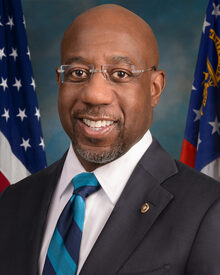
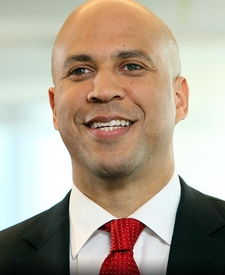
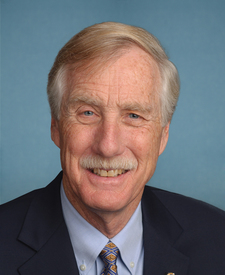
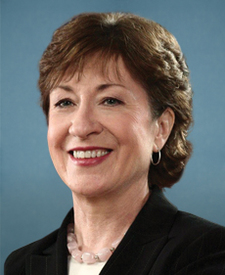
Ranked by swing score, 0–100 · swing-v3Bars show each input from 0 to 100: ideology gap, scorecard gap, , and the . is the seat’s partisan lean, and shows how much of the input data a score has.
Similar past votes, Senate
Earlier behind swing-v3’s inputLoading similar votes
Cosponsors
103 activeShow all 103 cosponsors
- Ken Calvert (R-CA-41)
- Angie Craig (D-MN-2)
- Brian K. Fitzpatrick (R-PA-1)
- Jake Auchincloss (D-MA-4)
- Janice D. Schakowsky (D-IL-9)
- Michael T. McCaul (R-TX-10)
- Scott DesJarlais (R-TN-4)
- Bradley Scott Schneider (D-IL-10)
- David G. Valadao (R-CA-22)
- Glenn Thompson (R-PA-15)
- Gwen Moore (D-WI-4)
- Jason Crow (D-CO-6)
- Jeff Hurd (R-CO-3)
- David P. Joyce (R-OH-14)
- Marc A. Veasey (D-TX-33)
- Maria Elvira Salazar (R-FL-27)
- Suzanne Bonamici (D-OR-1)
- Andrew R. Garbarino (R-NY-2)
- Brad Sherman (D-CA-32)
- Gus M. Bilirakis (R-FL-12)
- Stephen F. Lynch (D-MA-8)
How the swing score works
Ideology gapHow far a member’s DW-NOMINATE voting score sits from their party’s median in the same chamber.
Scorecard gapHow far their Heritage Action and LCV ratings stray from their party’s average, using the groups’ votes on similar bills where available.
Cross-pressureHow strongly their district or state leans toward the other party, from our own computed partisan lean.
Similar votesHow often they voted against their own party on earlier roll calls about this bill or similar ones.
Committee bonusMembers of the committees handling the bill decide whether it moves, so they get a boost.
Cosponsor checkThe sponsor and active cosponsors have already committed, so they drop toward entrenched.