Loading bill breakdown…
Loading bill breakdown…
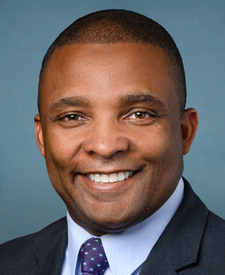
Sponsored by Rep. Gabe Evans (R-CO) · 2 active : 2 Democrats
Latest action: Received in the Senate and Read twice and referred to the Committee on Homeland Security and Governmental Affairs.
ELO Realignment and Strategic Engagement Reform Act of 2026
This bill requires the Department of Homeland Security (DHS) to develop a comprehensive plan to reorganize its Engagement, Liaison, and Outreach (ELO) Office and submit such plan to Congress. The bill also limits certain DHS actions until DHS submits the plan to Congress and certifies that it is being implemented.
ELO is part of DHS's Office of Intelligence and Analysis (I&A). ELO manages strategic relationships with I&A’s international stakeholders and federal, state, local, tribal, territorial, and private sector partners, including by facilitating intelligence and information sharing.
Under the bill, the plan must
identify redundant or non-essential positions, programs, or functions within ELO;
specify how reorganization of ELO will address such redundant or non-essential positions, programs, or functions;
realign essential functions and personnel of ELO within the Partner Engagement directorate of I&A; and
improve the management and coordination of strategic relationships with priority law enforcement agencies.
Until DHS submits this plan to Congress and certifies that it is being implemented, DHS may not (1) expand the staffing, budget, or programmatic scope of ELO; or (2) establish new offices duplicating the mission of ELO or the Partner Engagement directorate without congressional authorization.
Members fall into . 2 representatives don’t have enough data yet and are marked “insufficient data”. Non-voting delegates are not counted. The bill is not before the House right now; these scores show where members would stand.
Bars show each input from 0 to 100: ideology gap, scorecard gap, , and the . is the seat’s partisan lean, and shows how much of the input data a score has.
Loading similar votes
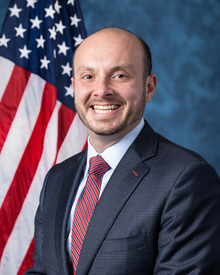
These members have less than half of the model’s inputs, so their scores are not banded or ranked.


Ideology is each member’s score. The cluster low on the chart includes the bill’s 3 sponsor and cosponsors in the House: they have already committed, so they score as entrenched. 2 representatives without a DW-NOMINATE score or with insufficient data are not plotted.
Similar votes count toward swing-v3 in the House: total similarity weight 69.0 (needs 5.0).