Loading bill breakdown…
1
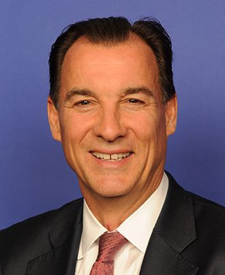
Laura GillenDemocrat · New York 4th · Lean D+2House Committee on Transportation and InfrastructureOn the ballot
Loading bill breakdown…
Sponsored by Rep. Mike Kennedy (R-UT) · 1 active : 1 Democrat
Latest action: Received in the Senate and Read twice and referred to the Committee on Homeland Security and Governmental Affairs.
Personnel Oversight and Shift Tracking Act of 2025 or the POST Act of 2025
The bill directs the Federal Protective Service (FPS) to improve the performance of security personnel contracted to protect federal buildings and to report on such efforts to Congress.
Within one year after the bill's enactment, FPS must establish performance testing and improvement protocols for contract security personnel. Specifically, FPS shall (1) establish standards for the collection, maintenance, and analysis of covert testing data; (2) conduct quarterly analytical reviews of covert testing data to identify trends and opportunities for operational improvement; (3) establish a mandatory, cause-specific corrective training and performance improvement plan for any individual who fails a covert test; and (4) update security training guidance to address failed covert tests, emerging threats, and best practices. FPS must report to Congress about implementation upon completion and annually thereafter.
Within 180 days after the bill’s enactment, FPS must assess whether to replace or upgrade its tracking system for managing and monitoring the deployment availability of contract security personnel. FPS must develop (1) an implementation plan that includes a timeline for the replacement or update; and (2) procedures to ensure timely and accurate communication to building tenants regarding contract security personnel absences or other gaps in coverage. FPS must report to Congress on the assessment within one year after the bill's enactment and annually for the next three years.
Members fall into . 2 representatives don’t have enough data yet and are marked “insufficient data”. Non-voting delegates are not counted. The bill is not before the House right now; these scores show where members would stand.
Bars show each input from 0 to 100: ideology gap, scorecard gap, , and the . is the seat’s partisan lean, and shows how much of the input data a score has.
Loading similar votes

These members have less than half of the model’s inputs, so their scores are not banded or ranked.


Ideology is each member’s score. The cluster low on the chart includes the bill’s 2 sponsor and cosponsors in the House: they have already committed, so they score as entrenched. 2 representatives without a DW-NOMINATE score or with insufficient data are not plotted.
Similar votes count toward swing-v3 in the House: total similarity weight 26.0 (needs 5.0).