Loading bill breakdown…
Loading bill breakdown…
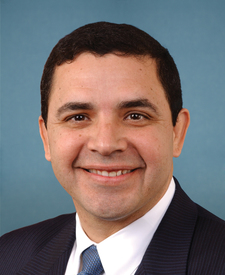
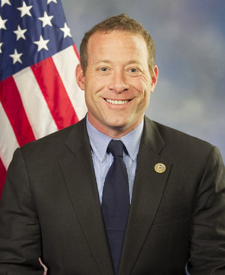
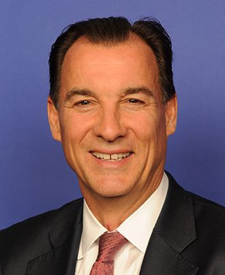
Sponsored by Rep. Aaron Bean (R-FL) · 3 active : 3 Republicans
Latest action: Received in the Senate and Read twice and referred to the Committee on Health, Education, Labor, and Pensions.
Transparency in Reporting of Adversarial Contributions to Education Act
This bill requires each local educational agency (LEA), as a condition of receiving federal elementary and secondary education funds, to ensure that each elementary and secondary school served by the LEA notifies parents of their rights to request and receive information regarding foreign influence (e.g., influence by China) in schools.
These rights include the right to
review (and make copies of at no cost) any curricular or professional development material used at the school that was obtained using funds received from a foreign government or a foreign entity of concern;
know, by written response, how many school personnel are compensated using funds received from a foreign government or a foreign entity of concern; and
know, by written response, information about funding from or agreements (e.g., contracts) with a foreign country or a foreign entity of concern.
Parents must submit a written request for this information.
Each school must post on a publicly accessible website (or otherwise widely disseminate to the public) a summary notice of parental rights under the bill.
The bill requires the Department of Education to notify state educational agencies (SEAs) about the bill's requirements. Each SEA must, as a condition of receiving federal elementary and secondary education funds, notify LEAs about the bill's requirements.
Members fall into . 3 representatives don’t have enough data yet and are marked “insufficient data”. Non-voting delegates are not counted. The bill is not before the House right now; these scores show where members would stand.
Bars show each input from 0 to 100: ideology gap, scorecard gap, , and the . is the seat’s partisan lean, and shows how much of the input data a score has.
Loading similar votes

These members have less than half of the model’s inputs, so their scores are not banded or ranked.


Ideology is each member’s score. The cluster low on the chart includes the bill’s 4 sponsor and cosponsors in the House: they have already committed, so they score as entrenched. 3 representatives without a DW-NOMINATE score or with insufficient data are not plotted.
Similar votes count toward swing-v3 in the House: total similarity weight 27.5 (needs 5.0).