Loading bill breakdown…
Loading bill breakdown…
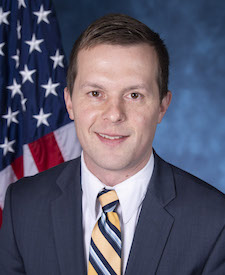
Sponsored by Rep. Michael Baumgartner (R-WA) · 21 active : 18 Republicans, 2 Democrats, 1 Independent
Latest action: Received in the Senate and Read twice and referred to the Committee on Health, Education, Labor, and Pensions.
Defending Education Transparency and Ending Rogue Regimes Engaging in Nefarious Transactions Act or the DETERRENT Act
This bill expands oversight and disclosure requirements related to foreign sources and institutions of higher education (IHEs).
Specifically, the bill requires an IHE to annually disclose to the Department of Education (ED) any year in which the IHE
receives a gift from a foreign country of concern (e.g., China or Russia) or foreign entity of concern of any dollar amount;
receives a gift or contract from a foreign source (other than a foreign country of concern or foreign entity of concern) that is valued at $50,000 or more, considered alone or in combination with all other gifts or contracts within a calendar year (current disclosure threshold is $250,000 or more), or which has an undetermined monetary value;
enters into a contract with a foreign country of concern or foreign entity of concern after receiving a waiver for such contract; or
is substantially controlled by a foreign source.
Additionally, the bill
prohibits IHEs from entering into contracts with a foreign country of concern or with a foreign entity of concern without obtaining a waiver,
requires certain IHEs to disclose gifts or contracts between covered individuals (e.g., researchers) and foreign sources, and
requires private IHEs with specified assets or investments to file annual investment disclosure reports.
The bill requires ED to investigate possible violations of this bill and outlines the various penalties for each violation. Penalties may include losing eligibility for federal student financial aid.
Members fall into . 3 representatives don’t have enough data yet and are marked “insufficient data”. Non-voting delegates are not counted. The bill is not before the House right now; these scores show where members would stand.
Bars show each input from 0 to 100: ideology gap, scorecard gap, , and the . is the seat’s partisan lean, and shows how much of the input data a score has.
Loading similar votes

These members have less than half of the model’s inputs, so their scores are not banded or ranked.


Ideology is each member’s score. The cluster low on the chart includes the bill’s 22 sponsor and cosponsors in the House: they have already committed, so they score as entrenched. 3 representatives without a DW-NOMINATE score or with insufficient data are not plotted.
Similar votes count toward swing-v3 in the House: total similarity weight 28.5 (needs 5.0).