Data: The Downballot · Federal Election Commission · Voteview · Congress.gov · Heritage Action · League of Conservation Voters.Partisan lean is computed by Congress Swing Tracker from presidential results (25% 2020 / 75% 2024); it is not the Cook PVI. Non-voting delegates are not ranked. Scores: model swing-v3. How the score worksContactSupport this site
H.R. 27: HALT Fentanyl Act · Congress Swing Tracker
H.R. 27·119th Congress·Crime and Law Enforcement
HALT Fentanyl Act
Sponsored by Rep. H. Morgan Griffith (R-VA) · 61 active : 58 Republicans, 2 Democrats, 1 Independent58 R, 2 D, 1 I
Latest action: Received in the Senate and Read twice and referred to the Committee on the Judiciary.
Halt All Lethal Trafficking of Fentanyl Act or the HALT Fentanyl Act
This bill permanently places fentanyl-related substances as a class into schedule I of the Controlled Substances Act. A schedule I controlled substance is a drug, substance, or chemical that has a high potential for abuse; has no currently accepted medical value; and is subject to regulatory controls and administrative, civil, and criminal penalties under the Controlled Substances Act.
Read full summaryHide full summary
Under the bill, offenses involving fentanyl-related substances are triggered by the same quantity thresholds and subject to the same penalties as offenses involving fentanyl analogues (e.g., offenses involving 100 grams or more trigger a 10-year mandatory minimum prison term).
Additionally, the bill establishes a new, alternative registration process for certain schedule I research.
The bill also makes several other changes to registration requirements for conducting research with controlled substances, including
permitting a single registration for related research sites in certain circumstances,
waiving the requirement for a new inspection in certain situations, and
allowing a registered researcher to perform certain manufacturing activities with small quantities of a substance without obtaining a manufacturing registration.
Finally, the bill expresses the sense that Congress agrees with the interpretation of Controlled Substances Act in
United States v. McCray
, a 2018 case decided by the U.S. District Court for the Western District of New York. In that case, the court held that butyryl fentanyl, a controlled substance, can be considered an analogue of fentanyl even though, under the Controlled Substances Act, the term
How the projections held up
Each member’s recorded vote compared with their swing projection from before the vote. A member by voting against most of their own party.
House
On PassagePassed312 yea, 108 nayFebruary 6, 2025 · Roll call 33
How members in each band voted on this House vote, by their projection before the vote
BandBand before the vote
VotedVoted yea or nay
BrokeBroke with party
Share
Swing
45
30
67%
Middle
137
35
26%
Entrenched
165
7
4%
Insufficient data
Committees and subjects
Committees
House Committee on Energy and Commerce · HouseReferred to
House Committee on the Judiciary · HouseReferred to
Senate Committee on the Judiciary · SenateReferred to
Members fall into . 3 representatives don’t have enough data yet and are marked “insufficient data”. Non-voting delegates are not counted. The bill is not before the House right now; these scores show where members would stand.
Key players in the House
Ranked by swing score, 0–100 · swing-v3, directional
: only movement toward the other party counts, so members who sit further from the center than their party no longer score as swing votes.
Bars show each input from 0 to 100: ideology gap, scorecard gap, , and the . is the seat’s partisan lean, and shows how much of the input data a score has.
Ideology gapHow far a member’s DW-NOMINATE voting score sits from their party’s median in the same chamber.
Scorecard gapHow far their Heritage Action and LCV ratings stray from their party’s average, using the groups’ votes on similar bills where available.
Cross-pressureHow strongly their district or state leans toward the other party, from our own computed partisan lean.
Similar votesHow often they voted against their own party on earlier roll calls about this bill or similar ones.
Committee bonusMembers of the committees handling the bill decide whether it moves, so they get a boost.
Cosponsor checkThe sponsor and active cosponsors have already committed, so they drop toward entrenched.
controlled substance analogue
specifically excludes a controlled substance.
64
24
38%
All voting members
411
96
23%
: Pair any member who broke with one who stayed with their party: in 83% of those pairs, the one who broke had the higher swing score before the vote. Chance would be 50%.
Projections from swing-v3-dir, computed with data from before the vote. Present and not voting never count as breaking.
Where the House has voted, each member’s appears with the projection made before it.
1
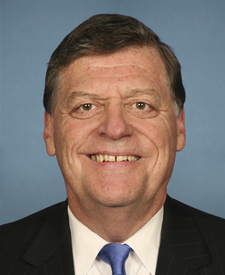
Thomas H. KeanRepublican · New Jersey 7th · Lean EVENHouse Committee on Energy and CommerceOn the ballot
Ideology gap
Scorecard gap
Cross-pressure
Similar votes
Committee
Broke with party on 11% of 42 similar votes
Today97Swing
Vote on passage, Feb 6, 2025:YeaProjected at the vote: 95 Swing (today: 97)
Similar votesNo dataCommitteeNo committee seatToo few votes on similar bills to measure
—Insufficient data
Ideology vs. swing score, House
Democrat
Republican
Independent
Click any dot to see which member it is. With the keyboard, tab to the chart and use the arrow keys.
Swing score
SWING ZONE 70+Entrenched below 30
Ringed dots broke with their party on the vote.
← More liberalDW-NOMINATE ideology scoreMore conservative →
Ideology is each member’s score. The cluster low on the chart includes the bill’s 62 sponsor and cosponsors in the House: they have already committed, so they score as entrenched. 3 representatives without a DW-NOMINATE score or with insufficient data are not plotted.
Similar votes count toward swing-v3 in the House: total similarity weight 31.0 (needs 5.0).
H.R. 27 · Feb 6, 2025 · Roll call 32On PassageHALT Fentanyl Act
PassedSame bill×3.0
H.R. 27 · Feb 6, 2025 · Roll call 31On Agreeing to the Amendment
FailedSame bill×3.0
S. 331 · Jun 12, 2025 · Roll call 165On PassageHALT Fentanyl Act
PassedShared subjects×1.0
H.J.Res. 44 · Jun 13, 2023 · Roll call 251On PassageProviding for congressional disapproval under chapter 8 of title 5, United States Code, of the rule submitted by the Bureau of Alcohol, Tobacco, Firearms, and Explosives relating to “Factoring Criteria for Firearms with Attached ’Stabilizing Braces’”
PassedShared subjects×1.0
H.R. 467 · May 25, 2023 · Roll call 236On PassageHALT Fentanyl Act
PassedShared subjects×1.0
H.R. 467 · May 25, 2023 · Roll call 235On Agreeing to the Amendment
H.R. 5625 · May 14, 2026 · Roll call 531On PassageCashless Bail Reporting Act
PassedSame policy area×0.5
Show 17 more
H.R. 6260 · May 14, 2026 · Roll call 529On PassageKeeping Violent Offenders Off Our Streets Act
PassedSame policy area×0.5
H.Con.Res. 96 · May 13, 2026 · Roll call 525On Agreeing to the ResolutionExpressing support for law enforcement officers
PassedSame policy area×0.5
H.R. 2853 · May 12, 2026 · Roll call 517On Motion to Suspend the Rules and Pass, as AmendedCombating Organized Retail Crime Act
PassedSame policy area×0.5
H.R. 2189 · Feb 12, 2026 · Roll call 430On PassageLaw-Enforcement Innovate to De-Escalate Act
Passed
Same policy area
×0.5
H.R. 3492 · Dec 17, 2025 · Roll call 350On PassageProtect Children’s Innocence Act
PassedSame policy area×0.5
H.R. 4371 · Dec 16, 2025 · Roll call 339On PassageKayla Hamilton Act
PassedSame policy area×0.5
H.R. 5107 · Nov 19, 2025 · Roll call 298On PassageCLEAN DC Act
PassedSame policy area×0.5
H.R. 5214 · Nov 19, 2025 · Roll call 297On PassageDistrict of Columbia Cash Bail Reform Act
PassedSame policy area×0.5
H.R. 5143 · Sep 17, 2025 · Roll call 274On PassageDistrict of Columbia Policing Protection Act
PassedSame policy area×0.5
H.R. 5140 · Sep 16, 2025 · Roll call 270On PassageTo lower the age at which a minor may be tried as an adult for certain criminal offenses in the District of Columbia to 14 years of age
 Thomas H. KeanRepublican · New Jersey 7th · Lean EVENHouse Committee on Energy and CommerceOn the ballotIdeology gapScorecard gapCross-pressureSimilar votesCommitteeBroke with party on 11% of 42 similar votesToday97SwingVote on passage, Feb 6, 2025:YeaProjected at the vote: 95 Swing (today: 97)