Loading bill breakdown…
S. 3971119th CongressCommerce
Small Business Innovation and Economic Security Act
Sponsored by Sen. Joni Ernst (R-IA) · 1 active : 1 Democrat
Latest action: Became Public Law No: 119-83.
Where it standsBecame law7 senators score as swing votes
Became law
- Senate: passedMar 3, 2026
- House: passedMar 17, 2026
- President: Signed into lawApr 13, 2026
Summary
, via Congress.govSmall Business Innovation and Economic Security Act
This act reauthorizes through FY2031 and modifies the Small Business Innovation Research (SBIR) program, the Small Business Technology Transfer (STTR) program, and related pilot programs. (The SBIR and STTR programs are administered by various federal agencies and provide competitive awards for domestic small businesses to conduct research and development projects that have the potential for commercialization.)
Read full summaryHide full summary
Specifically, the act expands the requirements for federal agencies administering these programs to evaluate the security risks of the small businesses that apply for awards under the programs. If an agency denies an application for security reasons, the agency must provide the small business with the basis for such determination.
Further, each agency must set a maximum number of proposals per fiscal year that a small business concern may submit in response to Phase I and Phase II solicitations.
The act expands the training requirements for agencies' contracting officers and acquisition workforce with respect to Phase III (commercialization of technologies) awards under the SBIR and STTR programs.
The act also establishes strategic breakthrough allocations for critical technology areas. These are additional Phase II SBIR and STTR awards to small businesses that demonstrate an effective technology and receive matching funds.
How the projections held up
Each member’s recorded vote compared with their swing projection from before the vote. A member by voting against most of their own party.
House
On Motion to Suspend the Rules and PassPassed345 yea, 41 nayMarch 17, 2026 · Roll call 89
| BandBand before the vote | VotedVoted yea or nay | BrokeBroke with party | Share |
|---|---|---|---|
| Swing | 33 | 0 | 0% |
| Middle | 220 | 36 | 16% |
| Entrenched | 130 | 5 | 4% |
| All |
Committees and subjects
Committees
No committee referrals recorded
Congress.gov lists no committee activity for this bill yet, so no member gets the gatekeeper bonus in swing-v3.
Subjects
- Advanced technology and technological innovations
- Asia
- China
- Computer security and identity theft
- Computers and information technology
- Data collection, sharing, protection
- Government lending and loan guarantees
- Intellectual property
- Military assistance, sales, and agreements
- Performance measurement
- Public contracts and procurement
- Research administration and funding
Show all 18 subjects
- Research and development
- Small Business Administration
How the Senate breaks down
- 7Swing 70–100
- 64Middle 30–70
- 29Entrenched 0–30
Members fall into . All 100 senators have enough data to score.
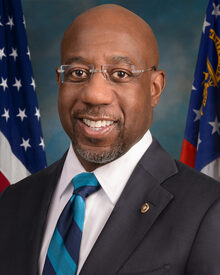
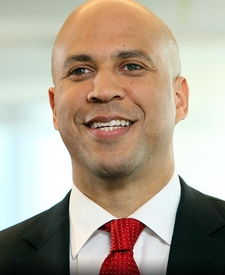
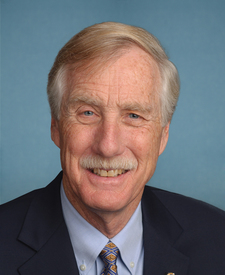
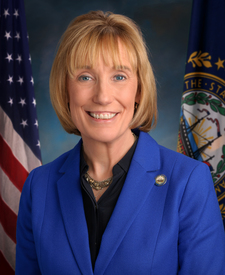
Key players in the Senate
Ranked by swing score, 0–100 · swing-v2Bars show each input from 0 to 100: ideology gap, scorecard gap, . is the seat’s partisan lean, and shows how much of the input data a score has.
Similar past votes, Senate
Earlier behind swing-v3’s inputLoading similar votes
Cosponsors
1 activeShow all 1 cosponsors
- Edward J. Markey (D-MA)
How the swing score works
Ideology gapHow far a member’s DW-NOMINATE voting score sits from their party’s median in the same chamber.
Scorecard gapHow far their Heritage Action and LCV ratings stray from their party’s average, using the groups’ votes on similar bills where available.
Cross-pressureHow strongly their district or state leans toward the other party, from our own computed partisan lean.
Similar votesHow often they voted against their own party on earlier roll calls about this bill or similar ones.
Committee bonusMembers of the committees handling the bill decide whether it moves, so they get a boost.
Cosponsor checkThe sponsor and active cosponsors have already committed, so they drop toward entrenched.