Loading bill breakdown…
S. 1383119th CongressGovernment Operations and Politics
Veterans Accessibility Advisory Committee Act of 2025
Sponsored by Sen. Rick Scott (R-FL) · 2 active : 2 Republicans
Latest action: Considered by Senate (Message from the House considered). (consideration: CR S1647)
Where it standsBefore the Senate9 senators score as swing votes
Passed both chambers, awaiting the President
- Senate: passedDec 18, 2025
- House: passedFeb 11, 2026
- President: Awaiting action
Summary
, via Congress.govSafeguard American Voter Eligibility Act or the SAVE America Act
This bill requires individuals to provide documentary proof of U.S. citizenship when registering to vote, and requires photo identification to vote, in federal elections.
Read full summaryHide full summary
Specifically, the bill prohibits states from accepting and processing an application to register to vote in a federal election unless the applicant presents documentary proof of U.S. citizenship. The bill specifies what documents are considered acceptable proof of U.S. citizenship, such as identification that complies with the REAL ID Act of 2005 that indicates U.S. citizenship, a valid U.S. passport, or a valid government-issued photo identification card that shows the applicant's place of birth was in the United States.
Further, the bill (1) requires states to accept and process a voter registration application in the event of a name discrepancy in the applicant's documentation, as long as the applicant provides additional documentation; and (2) requires states to establish an alternative process to demonstrate U.S. citizenship.
Within 30 days of the bill's enactment, each state must take affirmative steps on an ongoing basis to ensure that only U.S. citizens are registered to vote, which shall include establishing a program to identify individuals who are not U.S. citizens using information supplied by certain sources. Further, each state must submit its complete official list of eligible voters to the Department of Homeland Security for comparison with the Systematic Alien Verification for Entitlements system, which is used to verify immigration status. Individuals who are identified as noncitizens must be given the opportunity to provide documentary proof of U.S. citizenship.
How the projections held up
Each member’s recorded vote compared with their swing projection from before the vote. A member by voting against most of their own party.
House
On PassagePassed218 yea, 213 nayFebruary 11, 2026 · Roll call 69
| BandBand before the vote | VotedVoted yea or nay | BrokeBroke with party | Share |
|---|---|---|---|
| Swing | 52 | 1 | 2% |
| Middle | 216 | 0 | 0% |
| Entrenched | 159 | 0 | 0% |
| All |
Committees and subjects
Committees
- Senate Committee on Veterans' Affairs · SenateReported by · Markup by · Hearings by (full committee) · Referred to
- House Committee on House Administration · HouseActivity not recorded
Subjects
- Administrative law and regulatory procedures
- Advisory bodies
- Citizenship and naturalization
- Civil actions and liability
- Computers and information technology
- Congressional oversight
- Department of Veterans Affairs
- Disability assistance
- Election Assistance Commission
- Elections, voting, political campaign regulation
- Executive agency funding and structure
- Government information and archives
How the Senate breaks down
- 9Swing 70–100
- 59Middle 30–70
- 32Entrenched 0–30
Members fall into . All 100 senators have enough data to score.
Key players in the Senate
Ranked by swing score, 0–100 · swing-v2, directional: only movement toward the other party counts, so members who sit further from the center than their party no longer score as swing votes.
Bars show each input from 0 to 100: ideology gap, scorecard gap, . is the seat’s partisan lean, and shows how much of the input data a score has.
Similar past votes, Senate
Earlier behind swing-v3’s inputLoading similar votes
Cosponsors
2 active · 5 withdrawnShow all 7 cosponsors
- Jerry Moran (R-KS)
- Kirsten E. Gillibrand (D-NY) · withdrawn
- Richard Blumenthal (D-CT) · withdrawn
- Ashley Moody (R-FL)
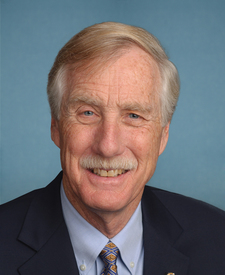
- Angus S. King Jr. (I-ME) · withdrawn
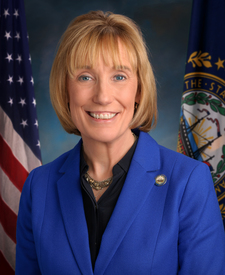
- Margaret Wood Hassan (D-NH) · withdrawn
- Raphael G. Warnock (D-GA) · withdrawn
How the swing score works
Ideology gapHow far a member’s DW-NOMINATE voting score sits from their party’s median in the same chamber.
Scorecard gapHow far their Heritage Action and LCV ratings stray from their party’s average, using the groups’ votes on similar bills where available.
Cross-pressureHow strongly their district or state leans toward the other party, from our own computed partisan lean.
Similar votesHow often they voted against their own party on earlier roll calls about this bill or similar ones.
Committee bonusMembers of the committees handling the bill decide whether it moves, so they get a boost.
Cosponsor checkThe sponsor and active cosponsors have already committed, so they drop toward entrenched.