Loading bill breakdown…
S. 93119th CongressEnvironmental Protection
Harmful Algal Bloom and Hypoxia Research and Control Amendments Act of 2025
Sponsored by Sen. Dan Sullivan (R-AK) · 15 active : 7 Republicans, 7 Democrats, 1 Independent
Latest action: Held at the desk.
Where it standsBefore the Senate5 senators score as swing votes
Passed Senate
- Senate: passedSep 10, 2025
- House: next
- President: not yet
Summary
, via Congress.govHarmful Algal Bloom and Hypoxia Research and Control Amendments Act of 2025
This bill extends through FY2030 and modifies the Harmful Algal Bloom and Hypoxia Research and Control Act to address algal blooms and hypoxia (deficiency of oxygen) in U.S. marine, estuarine, and freshwater systems. Harmful algal blooms are high concentrations of algae that may create nuisance or toxic conditions that are harmful to humans, animals, aquatic ecosystems, and the economy.
Read full summaryHide full summary
The bill directs the Inter-Agency Task Force on Harmful Algal Blooms and Hypoxia to submit to Congress an action strategy for harmful algal blooms at least once every five years. The bill also expands the task force's membership to include the Department of Energy.
The bill also expands the duties of the National Oceanic and Atmospheric Administration (NOAA) under the National Harmful Algal Bloom and Hypoxia program. NOAA must also carry out a variety of activities related to monitoring, predicting, preventing, mitigating, and responding to marine, coastal, and Great Lakes harmful algal bloom and hypoxia events. For example, NOAA must establish (1) a national network of observing systems for monitoring, detecting, and forecasting harmful algal blooms; and (2) a national-level incubator program to increase the number of strategies, technologies, and measures available to prevent, mitigate, and control harmful algal blooms.
Additionally, the Environmental Protection Agency must develop and enhance operational freshwater harmful algal bloom monitoring, observing, and forecasting programs in lakes, rivers, and reservoirs and carry out other activities related to researching freshwater harmful algal blooms and hypoxia events.
How the projections held up
Each member’s recorded vote compared with their swing projection from before the vote. A member by voting against most of their own party.
Senate
Passed by voice vote or unanimous consent: no individual votes recorded.
Committees and subjects
Committees
- Senate Committee on Commerce, Science, and Transportation · SenateReported by · Markup by · Referred to
Subjects
- Aquatic ecology
- Environmental assessment, monitoring, research
- Environmental health
- Environmental technology
- Food supply, safety, and labeling
- Great Lakes
- Hazardous wastes and toxic substances
- Higher education
- Lakes and rivers
- Marine and coastal resources, fisheries
- Marine pollution
- Research administration and funding
Show all 15 subjects
- State and local government operations
- Water quality
How the Senate breaks down
- 5Swing 70–100
- 54Middle 30–70
- 41Entrenched 0–30
Members fall into . All 100 senators have enough data to score.
Key players in the Senate
Ranked by swing score, 0–100 · swing-v2Bars show each input from 0 to 100: ideology gap, scorecard gap, . is the seat’s partisan lean, and shows how much of the input data a score has.
- 1
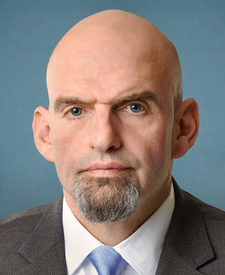 John FettermanDemocrat · Pennsylvania · Lean R+1Senate Committee on Commerce, Science, and Transportation
Similar past votes, Senate
Earlier behind swing-v3’s inputLoading similar votes
Cosponsors
15 activeShow all 15 cosponsors
- Gary C. Peters (D-MI)
- Jeff Merkley (D-OR)
- John Cornyn (R-TX)
- Sheldon Whitehouse (D-RI)
- Susan M. Collins (R-ME)
- Tammy Baldwin (D-WI)
- Lisa Murkowski (R-AK)
- Alex Padilla (D-CA)
- Bill Cassidy (R-LA)
- Christopher A. Coons (D-DE)
- Roger F. Wicker (R-MS)
- Bernie Moreno (R-OH)
- Adam B. Schiff (D-CA)
- Angus S. King Jr. (I-ME)
- John Kennedy (R-LA)
How the swing score works
Ideology gapHow far a member’s DW-NOMINATE voting score sits from their party’s median in the same chamber.
Scorecard gapHow far their Heritage Action and LCV ratings stray from their party’s average, using the groups’ votes on similar bills where available.
Cross-pressureHow strongly their district or state leans toward the other party, from our own computed partisan lean.
Similar votesHow often they voted against their own party on earlier roll calls about this bill or similar ones.
Committee bonusMembers of the committees handling the bill decide whether it moves, so they get a boost.
Cosponsor checkThe sponsor and active cosponsors have already committed, so they drop toward entrenched.