Loading bill breakdown…
H.R. 9332119th CongressEnergy
Load Forecasting Enhancement Act
Sponsored by Rep. Troy Balderson (R-OH) · 6 active : 3 Republicans, 3 Democrats
Latest action: Received in the Senate and Read twice and referred to the Committee on Energy and Natural Resources.
Where it standsPassed House, now in the Senate9 senators score as swing votes
Passed House
- House: passedSep 15, 2026
- Senate: next
- President: not yet
Summary
, via Congress.govLoad Forecasting Enhancement Act
This bill requires the Federal Energy Regulatory Commission (FERC) to establish regional boards to study and recommend best practices for electric load forecasting, which is the process of predicting the demand for electricity at a particular time. It also requires states to consider adopting the recommendations.
Read full summaryHide full summary
Specifically, the bill directs FERC to establish regional boards to study electric load forecasting, chair the boards, and run them jointly with each state public utility commission in the regions. The boards must (1) study issues relevant to identifying best practices for electric load forecasting that enhance the reliability and affordability of electric service to customers, and (2) identify such best practices. FERC must make recommendations to Congress for the consistent use across states of such best practices by electric utilities.
The bill also modifies provisions under the Public Utility Regulatory Policies Act to require state public utility commissions to consider adopting those recommendations.
It also modifies the Energy Policy and Conservation Act to make federal assistance for state energy conservation plans contingent upon the plan including procedures and programs to improve the accuracy, oversight, and transparency to stakeholders of the forecasting of electric loads by electric utilities.
How the projections held up
Each member’s recorded vote compared with their swing projection from before the vote. A member by voting against most of their own party.
House
Passed by voice vote or unanimous consent: no individual votes recorded.
Committees and subjects
Committees
- House Committee on Energy and Commerce · HouseReported by · Markup by · Referred to
- Energy · HouseReported by · Markup by · Referred to
- Senate Committee on Energy and Natural Resources · SenateReferred to
Subjects
- Advisory bodies
- Congressional oversight
- Data collection, sharing, protection
- Electric power generation and transmission
- Energy efficiency and conservation
- Government studies and investigations
- Intergovernmental relations
- State and local government operations
How the Senate breaks down
- 9Swing 70–100
- 62Middle 30–70
- 29Entrenched 0–30
Members fall into . All 100 senators have enough data to score.
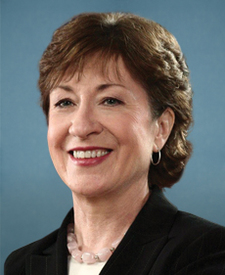
Key players in the Senate
Ranked by swing score, 0–100 · swing-v2, directional: only movement toward the other party counts, so members who sit further from the center than their party no longer score as swing votes.
Bars show each input from 0 to 100: ideology gap, scorecard gap, . is the seat’s partisan lean, and shows how much of the input data a score has.
Similar past votes, Senate
Earlier behind swing-v3’s inputLoading similar votes
Cosponsors
6 activeShow all 6 cosponsors
- Robert Menendez (D-NJ-8)
- John Joyce (R-PA-13)
- Eugene Simon Vindman (D-VA-7)
- Thomas H. Kean (R-NJ-7)
- H. Morgan Griffith (R-VA-9)
- Jennifer L. McClellan (D-VA-4)
How the swing score works
Ideology gapHow far a member’s DW-NOMINATE voting score sits from their party’s median in the same chamber.
Scorecard gapHow far their Heritage Action and LCV ratings stray from their party’s average, using the groups’ votes on similar bills where available.
Cross-pressureHow strongly their district or state leans toward the other party, from our own computed partisan lean.
Similar votesHow often they voted against their own party on earlier roll calls about this bill or similar ones.
Committee bonusMembers of the committees handling the bill decide whether it moves, so they get a boost.
Cosponsor checkThe sponsor and active cosponsors have already committed, so they drop toward entrenched.