Loading bill breakdown…
H.R. 7890119th CongressEducation
Science of Reading Act of 2026
Sponsored by Rep. Erin Houchin (R-IN) · 3 active : 1 Republican, 1 Democrat, 1 Independent
Latest action: Received in the Senate and Read twice and referred to the Committee on Health, Education, Labor, and Pensions.
Where it standsPassed House, now in the Senate7 senators score as swing votes
Passed House
- House: passedSep 16, 2026
- Senate: next
- President: not yet
Summary
, via Congress.govScience of Reading Act of 2026
This bill revises the Comprehensive Literacy State Development (CLSD) grant program to prioritize literacy instruction that is aligned to the science of reading.
Under the bill,
science of reading
Read full summaryHide full summary
is defined as an interdisciplinary body of evidence-based research about reading and issues related to reading and writing that (1) identifies instruction in phonemic awareness, phonics, vocabulary, fluency, comprehension, and writing as essential components to skilled reading; (2) demonstrates the importance of background knowledge, oral language, the connection between reading and writing, and strong writing instruction; (3) explains why some students have difficulty with reading and writing; and (4) does not use a three-cueing model.
Three-cueing model
means an instructional approach or model that (1) uses meaning drawn from context, pictures, or syntax as the primary basis for teaching word recognition; or (2) teaches visual memory as the primary basis for word recognition.
Current law authorizes competitive CLSD grants to state educational agencies (SEAs) and, through them, competitive subgrants to local educational agencies for the development and implementation of a comprehensive literacy instruction plan, professional development, and other activities. Eligible early childhood education programs may also receive subgrants for early literacy services.
The bill (1) specifies that comprehensive literacy instruction for CLSD grants does not include the use of a three-cueing model, and (2) requires the Department of Education and SEAs to prioritize awarding CLSD grants and subgrants for evidence-based activities that are aligned to the science of reading.
How the projections held up
Each member’s recorded vote compared with their swing projection from before the vote. A member by voting against most of their own party.
House
Passed by voice vote or unanimous consent: no individual votes recorded.
Committees and subjects
Committees
- House Committee on Education and Workforce · HouseReported by · Markup by · Referred to
- Senate Committee on Health, Education, Labor, and Pensions · SenateReferred to
Subjects
- Education programs funding
- Elementary and secondary education
- Language arts
- Teaching, teachers, curricula
How the Senate breaks down
- 7Swing 70–100
- 65Middle 30–70
- 28Entrenched 0–30
Members fall into . All 100 senators have enough data to score.
Key players in the Senate
Ranked by swing score, 0–100 · swing-v2Bars show each input from 0 to 100: ideology gap, scorecard gap, . is the seat’s partisan lean, and shows how much of the input data a score has.
- 1
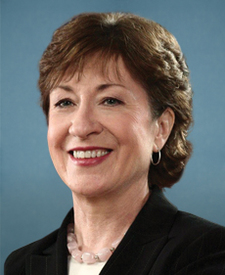 Susan M. CollinsRepublican · Maine · Lean D+4Senate Committee on Health, Education, Labor, and Pensions
Similar past votes, Senate
Earlier behind swing-v3’s inputLoading similar votes
Cosponsors
3 activeShow all 3 cosponsors
- John W. Mannion (D-NY-22)
- Kevin Kiley (I-CA-3)
- Virginia Foxx (R-NC-5)
How the swing score works
Ideology gapHow far a member’s DW-NOMINATE voting score sits from their party’s median in the same chamber.
Scorecard gapHow far their Heritage Action and LCV ratings stray from their party’s average, using the groups’ votes on similar bills where available.
Cross-pressureHow strongly their district or state leans toward the other party, from our own computed partisan lean.
Similar votesHow often they voted against their own party on earlier roll calls about this bill or similar ones.
Committee bonusMembers of the committees handling the bill decide whether it moves, so they get a boost.
Cosponsor checkThe sponsor and active cosponsors have already committed, so they drop toward entrenched.