Loading bill breakdown…
H.R. 7613119th CongressTransportation and Public Works
ALERT Act
Sponsored by Rep. Sam Graves (R-MO) · 87 active : 50 Republicans, 37 Democrats
Latest action: Received in the Senate and Read twice and referred to the Committee on Commerce, Science, and Transportation.
Where it standsPassed House, now in the Senate9 senators score as swing votes
Passed House
- House: passedApr 14, 2026
- Senate: next
- President: not yet
Summary
, via Congress.govAirspace Location and Enhanced Risk Transparency Act of 2026 or the ALERT Act
This bill addresses aviation safety by increasing requirements for aircraft tracking and communication using Automatic Dependent Surveillance-Broadcast (ADS-B) technology and expanding oversight. As background, ADS-B for broadcasting (Out) and receiving (In) transmits information (e.g., location and weather) among aircraft and air traffic control (ATC).
Read full summaryHide full summary
The bill requires the Department of Defense (DOD) and the Department of Transportation (DOT) to enter into an agreement regarding the use of collision prevention technologies on DOD aircraft. The agreement must require the use of ADS-B Out as the default practice for DOD helicopters operating in the national airspace, unless such use would affect operational security. For DOD helicopters that are carrying out special missions in the Washington, DC, metropolitan area and are exempt from ADS-B Out transmission requirements, DOD must coordinate with DOT to conduct a safety risk assessment and implement appropriate mitigations.
By December 31, 2031, DOD aircraft (other than certain special mission aircraft) must be equipped with and operating integrated ADS-B In technology.
With respect to civil aircraft, by December 31, 2031, the Federal Aviation Administration (FAA) must generally require aircraft that are currently required to be equipped with ADS-B Out to also be equipped with ADS-B In.
Additionally, among other requirements, the FAA must
establish time-on-position limits for supervisory ATC personnel;
establish a process to timely notify parties involved in certain near-miss incidents; and
How the projections held up
Each member’s recorded vote compared with their swing projection from before the vote. A member by voting against most of their own party.
House
On Motion to Suspend the Rules and Pass, as AmendedPassed396 yea, 10 nayApril 14, 2026 · Roll call 110
| BandBand before the vote | VotedVoted yea or nay | BrokeBroke with party | Share |
|---|---|---|---|
| Swing | 38 | 0 | 0% |
| Middle | 165 | 3 | 2% |
| Entrenched | 201 | 7 | 3% |
| All |
Committees and subjects
Committees
- House Committee on Armed Services · HouseReported by · Markup by · Referred to
- House Committee on Transportation and Infrastructure · HouseReported by · Markup by · Referred to
- Aviation · HouseDischarged from · Referred to
- Senate Committee on Commerce, Science, and Transportation · SenateReferred to
Subjects
- Accidents
- Administrative law and regulatory procedures
- Advisory bodies
- Aviation and airports
- Computer security and identity theft
- Computers and information technology
- Congressional oversight
- Data collection, sharing, protection
How the Senate breaks down
- 9Swing 70–100
- 62Middle 30–70
- 29Entrenched 0–30
Members fall into . All 100 senators have enough data to score.
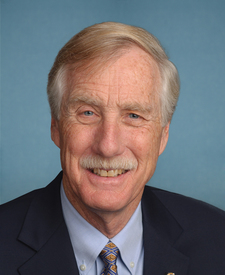
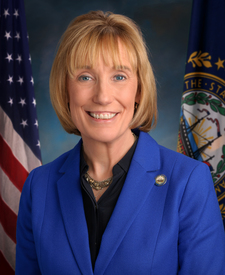
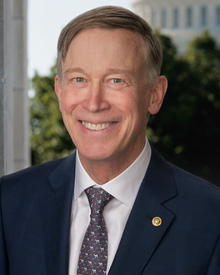
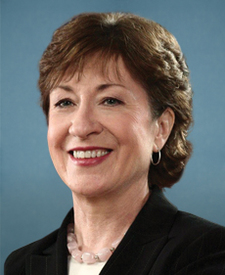
Key players in the Senate
Ranked by swing score, 0–100 · swing-v2, directional: only movement toward the other party counts, so members who sit further from the center than their party no longer score as swing votes.
Bars show each input from 0 to 100: ideology gap, scorecard gap, . is the seat’s partisan lean, and shows how much of the input data a score has.
Similar past votes, Senate
Earlier behind swing-v3’s inputLoading similar votes
Cosponsors
87 activeShow all 87 cosponsors
- Adam Smith (D-WA-9)
- André Carson (D-IN-7)
- Austin Scott (R-GA-8)
- Bonnie Watson Coleman (D-NJ-12)
- Brian Babin (R-TX-36)
- Bruce Westerman (R-AR-4)
- Burgess Owens (R-UT-4)
- Charles J. "Chuck" Fleischmann (R-TN-3)
- Chrissy Houlahan (D-PA-6)
- David Rouzer (R-NC-7)
- Derek Tran (D-CA-45)
- Donald S. Beyer (D-VA-8)
- Eric A. "Rick" Crawford (R-AR-1)
- Frederica S. Wilson (D-FL-24)
- Gilbert Ray Cisneros (D-CA-31)
- Henry C. "Hank" Johnson (D-GA-4)
- Hillary J. Scholten (D-MI-3)
How the swing score works
Ideology gapHow far a member’s DW-NOMINATE voting score sits from their party’s median in the same chamber.
Scorecard gapHow far their Heritage Action and LCV ratings stray from their party’s average, using the groups’ votes on similar bills where available.
Cross-pressureHow strongly their district or state leans toward the other party, from our own computed partisan lean.
Similar votesHow often they voted against their own party on earlier roll calls about this bill or similar ones.
Committee bonusMembers of the committees handling the bill decide whether it moves, so they get a boost.
Cosponsor checkThe sponsor and active cosponsors have already committed, so they drop toward entrenched.