Foster Youth Housing Opportunity Act
This bill expands states' permissible uses of federal funds under the John H. Chafee Foster Care Program for Successful Transition to Adulthood (Chafee program) to include supportive housing services.
Read full summaryHide full summary
The Chafee program is administered by the Department of Health and Human Services (HHS) Children's Bureau and provides funding to support youth and young adults who are in, or were formerly in, foster care with their transition to adulthood. The program is funded through formula grants awarded to child welfare agencies in states, certain territories, and participating tribes.
The bill allows states to use such funds to provide supportive services (e.g., financial counseling) for youth up to the age of 26 who are seeking to obtain or retain housing and who have experienced foster care and receive assistance under the Department of Housing and Urban Development (HUD) Section 8 Family Unification Program.
Additionally, HHS and HUD must jointly develop and issue guidance to state public child welfare agencies and public housing authorities to improve alignment and coordination of housing supportive services.
HHS, in consultation with HUD, also must report information about foster youth who are receiving federal housing assistance and the outcomes for such youth, including the extent to which such youth are able to access stable housing and the rates of homelessness. The report must include findings from any evaluations of state programs and recommendations for improving coordination between public child welfare agencies and federal housing programs.
 Brian K. FitzpatrickRepublican · Pennsylvania 1st · Lean D+1House Committee on Ways and MeansOn the ballotIdeology gapScorecard gapCross-pressure89Swing
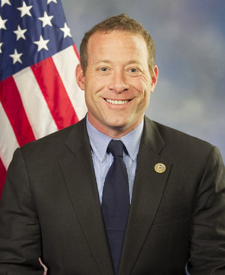 Josh GottheimerDemocrat · New Jersey 5th · Lean D+2House Committee on Financial ServicesOn the ballotIdeology gapScorecard gapCross-pressure84Swing