Loading bill breakdown…
H.R. 7008119th CongressCongress
Stop Insider Trading Act
Sponsored by Rep. Bryan Steil (R-WI) · 93 active : 90 Republicans, 2 Democrats, 1 Independent
Latest action: Cloture on the motion to proceed to the measure not invoked in Senate by Yea-Nay Vote. 53 - 47. Record Vote Number: 253.
Where it standsPassed House, now in the Senate7 senators score as swing votes
Passed House
- House: passedJul 22, 2026
- Senate: next
- President: not yet
Summary
, via Congress.govStop Insider Trading Act
This bill generally prohibits Members of Congress and their spouses and dependent children from purchasing stocks and requires public notice before these individuals may sell stocks.
Read full summaryHide full summary
Specifically, Members of Congress and the spouses and dependent children of Members of Congress may not purchase covered investments. Between 7 and 14 days before a Member or a covered spouse or dependent sells a covered investment, the relevant Member must file public notice of the intent to sell with the Clerk of the House of Representatives or the Secretary of the Senate, as appropriate. The Clerk or Secretary must publish this notice online. If the individual decides not to sell the covered investment, the notice must be withdrawn.
Under the bill, a
covered investment
is a security issued by a publicly traded company or a comparable economic interest. Some investments are exempt, including interest in a widely held investment fund and certain investments held in a trust.
Violations of these provisions are subject to a fee and, in the case of a purchase, a requirement to sell the covered investment. The fee must equal (1) the greater of $2,000 or 10% of the transaction value, and (2) any net gain realized from the transaction during a specified period. The fee may not be paid using campaign donations or Members’ official allowances.
Certain transactions by covered spouses and dependents are exempt, including transactions made on behalf of another person or made as part of compensation from the individual’s employer.
How the projections held up
Each member’s recorded vote compared with their swing projection from before the vote. A member by voting against most of their own party.
House
On PassagePassed232 yea, 198 nayJuly 22, 2026 · Roll call 280
| BandBand before the vote | VotedVoted yea or nay | BrokeBroke with party | Share |
|---|---|---|---|
| Swing | 23 | 7 | 30% |
| Middle | 196 | 6 | 3% |
| Entrenched | 211 | 0 | 0% |
| All |
Committees and subjects
Committees
- House Committee on House Administration · HouseReported by · Markup by · Referred to
Subjects
- Family relationships
- Financial services and investments
- Government ethics and transparency, public corruption
- Government information and archives
- Members of Congress
- Securities
How the Senate breaks down
- 7Swing 70–100
- 65Middle 30–70
- 28Entrenched 0–30
Members fall into . All 100 senators have enough data to score.
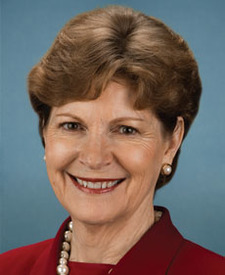
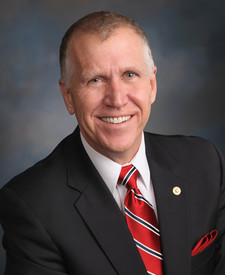
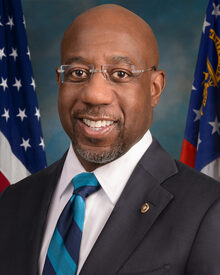
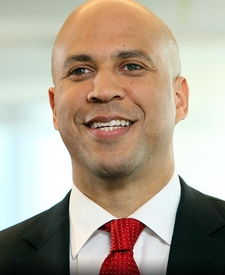
Key players in the Senate
Ranked by swing score, 0–100 · swing-v2Bars show each input from 0 to 100: ideology gap, scorecard gap, . is the seat’s partisan lean, and shows how much of the input data a score has.

Similar past votes, Senate
Earlier behind swing-v3’s inputLoading similar votes
Cosponsors
93 activeShow all 93 cosponsors
- Aaron Bean (R-FL-4)
- Addison P. McDowell (R-NC-6)
- Andrew Ogles (R-TN-5)
- Andy Biggs (R-AZ-5)
- Andy Harris (R-MD-1)
- Ann Wagner (R-MO-2)
- Anna Paulina Luna (R-FL-13)
- Ashley Hinson (R-IA-2)
- Ben Cline (R-VA-6)
- Bill Huizenga (R-MI-4)
- Chip Roy (R-TX-21)
- Christopher H. Smith (R-NJ-4)
- Cory Mills (R-FL-7)
- Dale W. Strong (R-AL-5)
- Dan Crenshaw (R-TX-2)
- David J. Taylor (R-OH-2)
- Derek Schmidt (R-KS-2)
- Derrick Van Orden (R-WI-3)
- Don Bacon (R-NE-2)
- Dusty Johnson
How the swing score works
Ideology gapHow far a member’s DW-NOMINATE voting score sits from their party’s median in the same chamber.
Scorecard gapHow far their Heritage Action and LCV ratings stray from their party’s average, using the groups’ votes on similar bills where available.
Cross-pressureHow strongly their district or state leans toward the other party, from our own computed partisan lean.
Similar votesHow often they voted against their own party on earlier roll calls about this bill or similar ones.
Committee bonusMembers of the committees handling the bill decide whether it moves, so they get a boost.
Cosponsor checkThe sponsor and active cosponsors have already committed, so they drop toward entrenched.