Loading bill breakdown…
H.R. 6955119th CongressFinance and Financial Sector
Main Street Capital Access Act
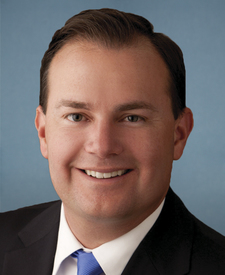
Sponsored by Rep. J. French Hill (R-AR) · 33 active : 33 Republicans
Latest action: Received in the Senate and Read twice and referred to the Committee on Banking, Housing, and Urban Affairs.
Where it standsPassed House, now in the Senate9 senators score as swing votes
Passed House
- House: passedJul 21, 2026
- Senate: next
- President: not yet
Summary
, via Congress.govMain Street Capital Access Act or the Main Street Act
This bill lessens and otherwise modifies banking regulations, including those regarding institution formation, supervision by federal financial regulators, and bank merger requirements.
Under the bill, new banks have a three-year phase-in period to meet certain capital requirements. The bill also reduces the leverage ratio for certain rural community banks.
Read full summaryHide full summary
Financial regulators must (1) tailor regulatory actions to limit burdens on financial institutions and must consider the institutions' risk profiles and business models, and (2) review their regulations more frequently and expand the scope of these reviews.
The bill eases requirements regarding bank mergers, for example, by allowing financial regulators to approve certain bank mergers without considering if the merger is noncompetitive or monopolistic.
The bill increases the dollar asset thresholds for various fees, reporting requirements, and other regulatory requirements so that more financial companies and banks are exempt from these requirements. For example, the bill increases the total asset threshold above which financial holding companies need Federal Reserve Board approval to acquire a company, thereby allowing for more acquisitions without board approval. The bill also raises certain asset thresholds so as to allow additional small bank holding companies to operate with higher debt levels and additional small banks to qualify for a longer examination cycle.
The bill also provides flexibilities regarding the use of reciprocal deposits, the resolution of failed banks, and other regulated activities.
Committees and subjects
Committees
- House Committee on Financial Services · HouseReported by · Markup by · Referred to
- Senate Committee on Banking, Housing, and Urban Affairs · SenateReferred to
Subjects
- Accounting and auditing
- Administrative law and regulatory procedures
- Administrative remedies
- Advisory bodies
- Bank accounts, deposits, capital
- Banking and financial institutions regulation
- Business ethics
- Business records
- Congressional oversight
- Consumer Financial Protection Bureau
- Corporate finance and management
- Credit and credit markets
Show all 31 subjects
Model
Directional: count only breaks toward the other partyWhy do scores change?v3default (selected)v2 model swing-v2
How the Senate breaks down
- 9Swing 70–100
- 71Middle 30–70
- 20Entrenched 0–30
Members fall into . All 100 senators have enough data to score.
Key players in the Senate
Ranked by swing score, 0–100 · swing-v3Bars show each input from 0 to 100: ideology gap, scorecard gap, , and the . is the seat’s partisan lean, and shows how much of the input data a score has.

Similar past votes, Senate
Earlier behind swing-v3’s inputLoading similar votes
Cosponsors
33 activeShow all 33 cosponsors
- Andrew Ogles (R-TN-5)
- Andrew R. Garbarino (R-NY-2)
- Andy Barr (R-KY-6)
- Ann Wagner (R-MO-2)
- Barry Loudermilk (R-GA-11)
- Bill Huizenga (R-MI-4)
- Bryan Steil (R-WI-1)
- Byron Donalds (R-FL-19)
- Daniel Meuser (R-PA-9)
- Frank D. Lucas (R-OK-3)
- John W. Rose (R-TN-6)
- Lisa C. McClain (R-MI-9)
- Maria Elvira Salazar (R-FL-27)
- Marlin A. Stutzman (R-IN-3)
- Michael Lawler (R-NY-17)
- Mike Flood (R-NE-1)
- Mike Haridopolos (R-FL-8)
- Monica De La Cruz (R-TX-15)
- Pete Sessions (R-TX-17)
- Ralph Norman (R-SC-5)
- Roger Williams (R-TX-25)
- Scott Fitzgerald
How the swing score works
Ideology gapHow far a member’s DW-NOMINATE voting score sits from their party’s median in the same chamber.
Scorecard gapHow far their Heritage Action and LCV ratings stray from their party’s average, using the groups’ votes on similar bills where available.
Cross-pressureHow strongly their district or state leans toward the other party, from our own computed partisan lean.
Similar votesHow often they voted against their own party on earlier roll calls about this bill or similar ones.
Committee bonusMembers of the committees handling the bill decide whether it moves, so they get a boost.
Cosponsor checkThe sponsor and active cosponsors have already committed, so they drop toward entrenched.