Loading bill breakdown…
Loading bill breakdown…
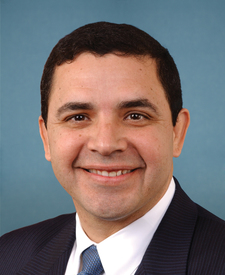
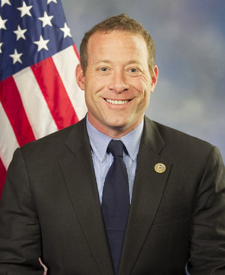
Sponsored by Rep. Gregory F. Murphy (R-NC) · 1 active : 1 Republican
Latest action: Received in the Senate and Read twice and referred to the Committee on Finance.
Haiti Economic Lift Program Extension Act
This bill extends through December 31, 2028, the special duty-free rules for various apparel products imported from Haiti, including the duty-free treatment provided for a limited amount (referred to as tariff preference levels) of certain apparel products assembled in and imported from Haiti.
The bill directs the President to proclaim such modifications to the Harmonized Tariff Schedule of the United States (HTS) that may be necessary to restore preferential treatment to articles that became ineligible for such treatment due to prior revisions to the HTS.
The bill also provides for the refund of duties (i.e., liquidation or reliquidation of entries) on covered articles from Haiti that entered into the United States on or after September 30, 2025, and before the date of this bill's enactment. A request for liquidation or reliquidation must be filed with U.S. Customs and Border Protection (CBP), and the request must contain sufficient information for CBP to locate the entry or, if the entry cannot be located, reconstruct the entry. CBP must refund any duties previously paid with respect to the entry within 90 days.
Each member’s recorded vote compared with their swing projection from before the vote. A member by voting against most of their own party.
| BandBand before the vote | VotedVoted yea or nay | BrokeBroke with party | Share |
|---|---|---|---|
| Swing | 32 | 1 | 3% |
| Middle | 223 | 36 | 16% |
| Entrenched | 132 | 8 | 6% |
| All |
Members fall into . 2 representatives don’t have enough data yet and are marked “insufficient data”. Non-voting delegates are not counted. The bill is not before the House right now; these scores show where members would stand.
Bars show each input from 0 to 100: ideology gap, scorecard gap, . is the seat’s partisan lean, and shows how much of the input data a score has. Where the House has voted, each member’s appears with the projection made before it.
Loading similar votes
| 387 |
| 45 |
| 12% |
: Pair any member who broke with one who stayed with their party: in 57% of those pairs, the one who broke had the higher swing score before the vote. Chance would be 50%.
Projections from swing-v2, computed with data from before the vote. Present and not voting never count as breaking.

These members have less than half of the model’s inputs, so their scores are not banded or ranked.


Ringed dots broke with their party on the vote.
Ideology is each member’s score. The cluster low on the chart includes the bill’s 2 sponsor and cosponsors in the House: they have already committed, so they score as entrenched. 2 representatives without a DW-NOMINATE score or with insufficient data are not plotted.
Similar votes count toward swing-v3 in the House: total similarity weight 6.0 (needs 5.0).