Loading bill breakdown…
H.R. 6422119th CongressEnvironmental Protection
American Water Stewardship Act
Sponsored by Rep. Pete Stauber (R-MN) · 3 active : 1 Republican, 2 Democrats
Latest action: Received in the Senate and Read twice and referred to the Committee on Environment and Public Works.
Where it standsPassed House, now in the Senate11 senators score as swing votes
Passed House
- House: passedMar 24, 2026
- Senate: next
- President: not yet
Summary
, via Congress.govAmerican Water Stewardship Act
This bill reauthorizes several water quality protection and restoration programs of the Environmental Protection Agency (EPA) and makes related requirements.
Specifically, the bill reauthorizes through FY2031 the Great Lakes Restoration Initiative, the Long Island Sound Partnership program, the Columbia River Basin Restoration Program, the National Estuary Program, and the BEACH Act program.
Read full summaryHide full summary
The bill also modifies some of those programs. For example, the bill modifies the National Estuary Program, including by establishing the Mississippi Sound as an estuary of national significance that may receive support under the program. It also modifies the BEACH Act program, including by allowing states or local governments to use grants provided under the program to identify specific sources of contamination for coastal recreation waters adjacent to beaches or similar points of access that are used by the public.
Additionally, the bill modifies the San Francisco Estuary Partnership, including by making federal agencies eligible for grants provided under the program.
The bill also prohibits funding made available for FY2026-FY2031 to carry out specified Clean Water Act programs from being provided to nonfederal entities that are domiciled in, located in, organized under, have a principal place of business in, or have agreements with foreign countries of concern.
Finally, the bill directs the Government Accountability Office to evaluate and report on specified geographic programs of the EPA.
Committees and subjects
Committees
- House Committee on Transportation and Infrastructure · HouseReported by · Markup by · Discharged from · Referred to
- Water Resources and Environment · HouseReferred to
- Senate Committee on Environment and Public Works · SenateReferred to
Subjects
- Environmental assessment, monitoring, research
- Geography and mapping
- Lakes and rivers
- Marine pollution
- Water quality
- Wetlands
Model
Directional: count only breaks toward the other partyWhy do scores change?v3default (selected)v2 model swing-v2
How the Senate breaks down
- 11Swing 70–100
- 69Middle 30–70
- 20Entrenched 0–30
Members fall into . All 100 senators have enough data to score.
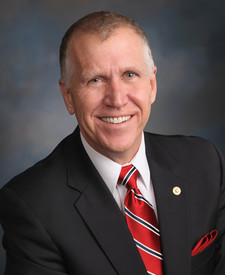
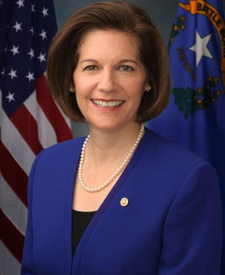
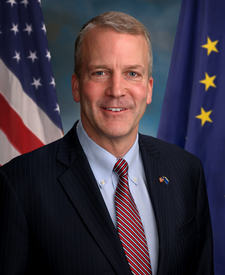
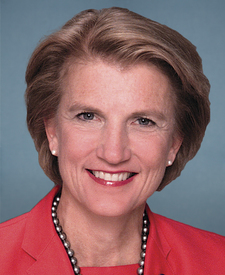
Key players in the Senate
Ranked by swing score, 0–100 · swing-v3, directional: only movement toward the other party counts, so members who sit further from the center than their party no longer score as swing votes.
Bars show each input from 0 to 100: ideology gap, scorecard gap, , and the . is the seat’s partisan lean, and shows how much of the input data a score has.

Similar past votes, Senate
Earlier behind swing-v3’s inputLoading similar votes
Cosponsors
3 activeShow all 3 cosponsors
- Kristen McDonald Rivet (D-MI-8)
- Nick LaLota (R-NY-1)
- Hillary J. Scholten (D-MI-3)
How the swing score works
Ideology gapHow far a member’s DW-NOMINATE voting score sits from their party’s median in the same chamber.
Scorecard gapHow far their Heritage Action and LCV ratings stray from their party’s average, using the groups’ votes on similar bills where available.
Cross-pressureHow strongly their district or state leans toward the other party, from our own computed partisan lean.
Similar votesHow often they voted against their own party on earlier roll calls about this bill or similar ones.
Committee bonusMembers of the committees handling the bill decide whether it moves, so they get a boost.
Cosponsor checkThe sponsor and active cosponsors have already committed, so they drop toward entrenched.