Fire Improvement and Reforming Exceptional Events Act or the FIRE Act
This bill modifies the definition of exceptional events under the Clean Air Act and requires the Environmental Protection Agency (EPA) to revise its regulations regarding exceptional events or actions to mitigate wildfire risk.
Generally, the EPA must exclude data from use in determinations of exceedances and violations of national ambient air quality standards (NAAQS) if a state demonstrates that an exceptional event caused a specific air pollution concentration.
Read full summaryHide full summary
The bill provides that events caused by human activity that are intended to mirror the occurrence or reoccurrence of a natural event are exceptional events. Additionally, the bill no longer excludes from consideration as an exceptional event (1) meteorological events involving high temperatures or a lack of precipitation, or (2) stagnation of air masses that does not ordinarily occur.
The bill requires the EPA to revise regulations regarding the reviewing and handling of air quality monitoring data influenced by actions to mitigate wildfire risk.
The bill also requires the EPA to conduct regional modeling and analysis when multiple states submit petitions regarding the same exceptional event or action to mitigate wildfire risk.
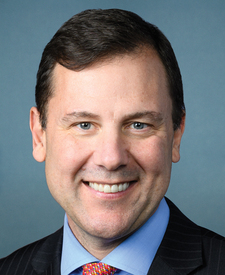 Thomas H. KeanRepublican · New Jersey 7th · Lean EVENHouse Committee on Energy and CommerceOn the ballotIdeology gapScorecard gapCross-pressure86Swing