Loading bill breakdown…
H.R. 6387119th CongressEnvironmental Protection
FIRE Act
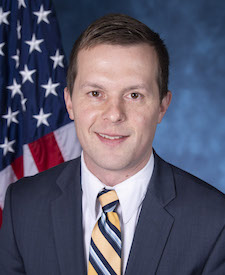
Sponsored by Rep. Gabe Evans (R-CO) · 3 active : 2 Republicans, 1 Democrat
Latest action: Received in the Senate and Read twice and referred to the Committee on Environment and Public Works.
Where it standsPassed House, now in the Senate11 senators score as swing votes
Passed House
- House: passedApr 22, 2026
- Senate: next
- President: not yet
Summary
, via Congress.govFire Improvement and Reforming Exceptional Events Act or the FIRE Act
This bill modifies the definition of exceptional events under the Clean Air Act and requires the Environmental Protection Agency (EPA) to revise its regulations regarding exceptional events or actions to mitigate wildfire risk.
Generally, the EPA must exclude data from use in determinations of exceedances and violations of national ambient air quality standards (NAAQS) if a state demonstrates that an exceptional event caused a specific air pollution concentration.
Read full summaryHide full summary
The bill provides that events caused by human activity that are intended to mirror the occurrence or reoccurrence of a natural event are exceptional events. Additionally, the bill no longer excludes from consideration as an exceptional event (1) meteorological events involving high temperatures or a lack of precipitation, or (2) stagnation of air masses that does not ordinarily occur.
The bill requires the EPA to revise regulations regarding the reviewing and handling of air quality monitoring data influenced by actions to mitigate wildfire risk.
The bill also requires the EPA to conduct regional modeling and analysis when multiple states submit petitions regarding the same exceptional event or action to mitigate wildfire risk.
How the projections held up
Each member’s recorded vote compared with their swing projection from before the vote. A member by voting against most of their own party.
House
On PassagePassed220 yea, 198 nayApril 22, 2026 · Roll call 136
| BandBand before the vote | VotedVoted yea or nay | BrokeBroke with party | Share |
|---|---|---|---|
| Swing | 55 | 6 | 11% |
| Middle | 225 | 2 | 1% |
| Entrenched | 136 | 1 | 1% |
| Insufficient data |
Committees and subjects
Committees
- House Committee on Energy and Commerce · HouseReported by · Markup by · Referred to
- Environment · HouseReported by · Markup by · Referred to
- Senate Committee on Environment and Public Works · SenateReferred to
Subjects
- Administrative law and regulatory procedures
- Air quality
- Atmospheric science and weather
- Environmental assessment, monitoring, research
- Environmental regulatory procedures
- Fires
- Forests, forestry, trees
- Government information and archives
- State and local government operations
Model
Directional: count only breaks toward the other partyWhy do scores change?v3default (selected)v2 model swing-v2
How the House breaks down
- 73Swing 70–100
- 218Middle 30–70
- 142Entrenched 0–30
Members fall into . All 433 representatives have enough data to score. Non-voting delegates are not counted. The bill is not before the House right now; these scores show where members would stand.
Key players in the House
Ranked by swing score, 0–100 · swing-v3, directional: only movement toward the other party counts, so members who sit further from the center than their party no longer score as swing votes.
Bars show each input from 0 to 100: ideology gap, scorecard gap, , and the . is the seat’s partisan lean, and shows how much of the input data a score has. Where the House has voted, each member’s appears with the projection made before it.
- 1
Similar past votes, House
Earlier behind swing-v3’s inputLoading similar votes
Cosponsors
3 activeShow all 3 cosponsors
- Adam Gray (D-CA-13)
- Paul A. Gosar (R-AZ-9)
- Jeff Crank (R-CO-5)
How the swing score works
Ideology gapHow far a member’s DW-NOMINATE voting score sits from their party’s median in the same chamber.
Scorecard gapHow far their Heritage Action and LCV ratings stray from their party’s average, using the groups’ votes on similar bills where available.
Cross-pressureHow strongly their district or state leans toward the other party, from our own computed partisan lean.
Similar votesHow often they voted against their own party on earlier roll calls about this bill or similar ones.
Committee bonusMembers of the committees handling the bill decide whether it moves, so they get a boost.
Cosponsor checkThe sponsor and active cosponsors have already committed, so they drop toward entrenched.