Loading bill breakdown…
H.R. 5408119th CongressLabor and Employment
Faster Labor Contracts Act
Sponsored by Rep. Donald Norcross (D-NJ) · 110 active : 17 Republicans, 93 Democrats
Latest action: Received in the Senate.
Where it standsPassed House, now in the Senate9 senators score as swing votes
Passed House
- House: passedJun 9, 2026
- Senate: next
- President: not yet
Summary
, via Congress.govFaster Labor Contracts Act
This bill establishes mandatory deadlines for parties negotiating an initial collective bargaining agreement (CBA) and provides for mediation and arbitration to finalize CBAs.
Read full summaryHide full summary
Under the bill, CBA negotiations must begin within 10 days after an employer receives a written request from a newly recognized or certified bargaining representative. The bill provides that parties must make every reasonable effort to conclude and sign a CBA. Further, the bill provides that, if the parties have not reached an agreement after 90 days, either party may request mediation by the Federal Mediation and Conciliation Service (FMCS). The bill directs FMCS to use its best efforts to secure an agreement.
If mediation does not result in an agreement within 30 days (or an additional period agreed to by both parties), FMSC must refer the parties to an arbitration panel to render a decision settling the dispute. The panel must consider specified factors, including the employer's financial prospects and employees' cost of living. The resulting CBA is binding on the parties for two years. (Parties may agree to amend the terms during the two-year period.)
The bill specifies that (1) an employer must maintain current wages, hours, terms, and conditions of employment during negotiations; and (2) an employer's duty to collectively bargain continues even if a representative has been decertified.
The Government Accountability Office must report to Congress regarding the average number of days between the certification or recognition of a bargaining representative and the date the initial CBA was executed.
Committees and subjects
Committees
- House Committee on Education and Workforce · HouseReferred to
Subjects
- Alternative dispute resolution, mediation, arbitration
- Congressional oversight
- Government studies and investigations
- Labor-management relations
- Wages and earnings
Model
Directional: count only breaks toward the other partyWhy do scores change?v3default (selected)v2 model swing-v2
How the Senate breaks down
- 9Swing 70–100
- 62Middle 30–70
- 29Entrenched 0–30
Members fall into . All 100 senators have enough data to score.
Key players in the Senate
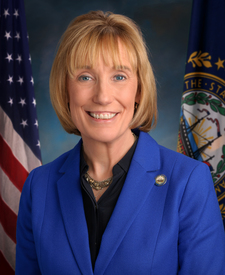
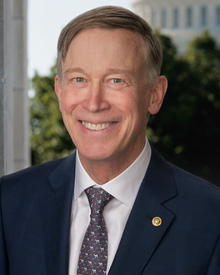
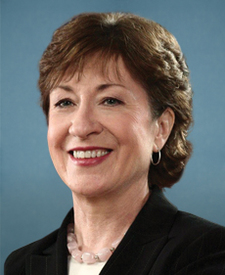
Ranked by swing score, 0–100 · swing-v3, directional: only movement toward the other party counts, so members who sit further from the center than their party no longer score as swing votes.
Bars show each input from 0 to 100: ideology gap, scorecard gap, , and the . is the seat’s partisan lean, and shows how much of the input data a score has.
Similar past votes, Senate
Earlier behind swing-v3’s inputLoading similar votes
Cosponsors
110 activeShow all 110 cosponsors
- Andrew R. Garbarino (R-NY-2)
- Angie Craig (D-MN-2)
- Brian K. Fitzpatrick (R-PA-1)
- Christopher H. Smith (R-NJ-4)
- Christopher R. Deluzio (D-PA-17)
- Don Bacon (R-NE-2)
- Emily Randall (D-WA-6)
- Haley M. Stevens (D-MI-11)
- Jared F. Golden (D-ME-2)
- Jefferson Van Drew (R-NJ-2)
- Josh Riley (D-NY-19)
- Mary Gay Scanlon (D-PA-5)
- Michael A. Rulli (R-OH-6)
- Michael Lawler (R-NY-17)
- Morgan McGarvey (D-KY-3)
- Nick LaLota (R-NY-1)
- Nicole Malliotakis (R-NY-11)
- Nikki Budzinski (D-IL-13)
- Pete Stauber (R-MN-8)
How the swing score works
Ideology gapHow far a member’s DW-NOMINATE voting score sits from their party’s median in the same chamber.
Scorecard gapHow far their Heritage Action and LCV ratings stray from their party’s average, using the groups’ votes on similar bills where available.
Cross-pressureHow strongly their district or state leans toward the other party, from our own computed partisan lean.
Similar votesHow often they voted against their own party on earlier roll calls about this bill or similar ones.
Committee bonusMembers of the committees handling the bill decide whether it moves, so they get a boost.
Cosponsor checkThe sponsor and active cosponsors have already committed, so they drop toward entrenched.