Loading bill breakdown…

Loading bill breakdown…
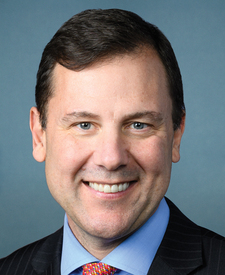
Sponsored by Rep. Tim Moore (R-NC) · 19 active : 17 Republicans, 2 Democrats
Latest action: Received in the Senate. Read twice. Placed on Senate Legislative Calendar under General Orders. Calendar No. 448.
Disaster Loan Accountability and Reform Act or the DLARA
This bill modifies the Small Business Administration (SBA) disaster loan program to require additional oversight and reports regarding the program.
First, the bill requires the SBA to report monthly on the operation of the disaster loan program. (Currently, the SBA must report only during the applicable period for a major disaster.) The report must estimate the date on which available funding for such loans will reach 10% of the most recent appropriation and the date on which the funds will be depleted. If a report is not submitted by the required date, no funds may be appropriated for official travel by the SBA Administrator until the report is submitted.
Second, the President's annual budget must include separate statements regarding the appropriations request for SBA disaster loans and COVID-19 Economic Injury Disaster Loans (EIDL), including explanations for any difference between the amount requested and the 10-year average cost for such loans.
Third, the SBA must notify Congress when the balance of amounts available for disaster loans is less than 10% of the 10-year average annual cost provided in the most recent presidential budget.
Finally, the bill requires additional oversight of the disaster loan program, including
Government Accountability Office reports on the disbursement of disaster loans and the cost of specified SBA rules that modified the loan program; and
an SBA report on its actions to improve forecasting, data quality, and budget assumptions for the cost of disaster loans.
Each member’s recorded vote compared with their swing projection from before the vote. A member by voting against most of their own party.
Passed by voice vote or unanimous consent: no individual votes recorded.
Members fall into . 2 representatives don’t have enough data yet and are marked “insufficient data”. Non-voting delegates are not counted. The bill is not before the House right now; these scores show where members would stand.
Bars show each input from 0 to 100: ideology gap, scorecard gap, . is the seat’s partisan lean, and shows how much of the input data a score has.
Loading similar votes
These members have less than half of the model’s inputs, so their scores are not banded or ranked.


Ideology is each member’s score. The cluster low on the chart includes the bill’s 18 sponsor and cosponsors in the House: they have already committed, so they score as entrenched. 2 representatives without a DW-NOMINATE score or with insufficient data are not plotted.
Similar votes count toward swing-v3 in the House: total similarity weight 13.0 (needs 5.0).