Loading bill breakdown…
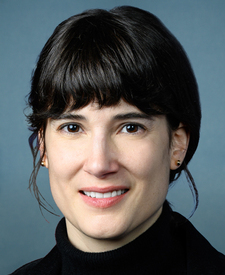
Sponsored by Rep. Andrea Salinas (D-OR) · 3 active : 1 Republican, 2 Democrats
Latest action: Received in the Senate and Read twice and referred to the Committee on Commerce, Science, and Transportation.
Nucleic Acid Standards for Biosecurity Act
This bill explicitly requires the National Institute of Standards and Technology (NIST) to support the development of best practices and technical standards for nucleic acid synthesis.
Nucleic acids, including deoxyribonucleic acid (DNA) and ribonucleic acid (RNA), carry genetic information within cells. Nucleic acid synthesis is the process of designing and creating custom nucleic acids; it is used in the development of medications and agricultural products. However, this technology also poses a risk of misuse (e.g., the intentional or unintentional creation of dangerous biological agents).
The bill requires NIST to carry out measurement research to support the development and improvement of biosecurity best practices and technical standards related to nucleic acid synthesis. This effort must address specified topics including nucleic acid synthesis screening, operational security, and conformity assessment. (A 2023 executive order titled
Safe, Secure, and Trustworthy Development and Use of Artificial Intelligence
directed NIST to develop and refine similar specifications and best practices for use by synthetic nucleic acid providers. NIST's work on this topic is ongoing.)
In carrying out this effort, NIST must convene stakeholders to develop and periodically update consensus priorities and best practices for synthetic nucleic acid screening mechanisms. Within a specified period, NIST must submit a summary of the stakeholder group’s findings to Congress.
NIST must also take steps to advance risk management best practices and technical standards for engineering biology and biomanufacturing, including with respect to risks associated with the use of artificial intelligence.
Each member’s recorded vote compared with their swing projection from before the vote. A member by voting against most of their own party.
Passed by voice vote or unanimous consent: no individual votes recorded.
Members fall into . 2 representatives don’t have enough data yet and are marked “insufficient data”. Non-voting delegates are not counted. The bill is not before the House right now; these scores show where members would stand.
: only movement toward the other party counts, so members who sit further from the center than their party no longer score as swing votes.
Bars show each input from 0 to 100: ideology gap, scorecard gap, . is the seat’s partisan lean, and shows how much of the input data a score has.
Loading similar votes
These members have less than half of the model’s inputs, so their scores are not banded or ranked.


Ideology is each member’s score. The cluster low on the chart includes the bill’s 4 sponsor and cosponsors in the House: they have already committed, so they score as entrenched. 2 representatives without a DW-NOMINATE score or with insufficient data are not plotted.
Similar votes count toward swing-v3 in the House: total similarity weight 5.5 (needs 5.0).