Loading bill breakdown…
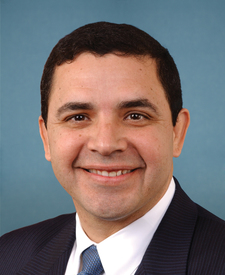
Sponsored by Rep. Salud O. Carbajal (D-CA) · 1 active : 1 Republican
Latest action: Received in the Senate and Read twice and referred to the Committee on Commerce, Science, and Transportation.
American Cargo for American Ships Act
This bill requires 100% of equipment, materials, and commodities procured, furnished, or financed by the Department of Transportation (DOT) and transported on ocean vessels to be transported on U.S.-flagged commercial vessels. (Current
cargo preference
laws require that a minimum percentage of federally financed ocean cargo be transported on U.S.-flagged commercial vessels. For civilian agencies and agricultural cargo, the minimum is generally 50%.)
Specifically, the bill imposes the requirement on DOT (for cargo it contracts for or procures for itself) and recipients of DOT funding (for cargo DOT has financed with federal funds or advanced funds for the recipient to obtain). As under current cargo preference laws, the requirement applies to the extent those vessels are available at fair and reasonable rates for U.S.-flagged commercial vessels, in a manner that will ensure fair and reasonable participation of U.S.-flagged commercial vessels by geographic area.
Members fall into . 2 representatives don’t have enough data yet and are marked “insufficient data”. Non-voting delegates are not counted. The bill is not before the House right now; these scores show where members would stand.
: only movement toward the other party counts, so members who sit further from the center than their party no longer score as swing votes.
Bars show each input from 0 to 100: ideology gap, scorecard gap, . is the seat’s partisan lean, and shows how much of the input data a score has.
Loading similar votes
These members have less than half of the model’s inputs, so their scores are not banded or ranked.


Ideology is each member’s score. The cluster low on the chart includes the bill’s 2 sponsor and cosponsors in the House: they have already committed, so they score as entrenched. 2 representatives without a DW-NOMINATE score or with insufficient data are not plotted.
Similar votes count toward swing-v3 in the House: total similarity weight 14.5 (needs 5.0).