Loading bill breakdown…
H.R. 1713119th CongressForeign Trade and International Finance
Agricultural Risk Review Act of 2025
Sponsored by Rep. Frank D. Lucas (R-OK) · 20 active : 10 Republicans, 10 Democrats
Latest action: Received in the Senate and Read twice and referred to the Committee on Banking, Housing, and Urban Affairs.
Where it standsPassed House, now in the Senate7 senators score as swing votes
Passed House
- House: passedJun 23, 2025
- Senate: next
- President: not yet
Summary
, via Congress.govAgricultural Risk Review Act of 2025
Read full summaryHide full summary
This bill makes changes to the Committee on Foreign Investment in the United States (CFIUS), including by requiring CFIUS to determine whether a national security review is necessary for reportable agricultural land transactions that are referred by the Department of Agriculture (USDA). (CFIUS oversees the national security risks of certain foreign investment in the United States. CFIUS has the authority to review covered transactions, which include mergers, acquisitions, and takeovers that could result in foreign control of a U.S. business; certain investments in businesses involved in critical technologies, critical infrastructure, or sensitive personal data; and certain real estate transactions.)
Specifically, the bill directs CFIUS to, after receiving notification from USDA, determine (1) whether a reportable agricultural land transaction is a covered transaction, and (2) whether CFIUS should initiate a national security review or take another action with respect to the transaction.
Reportable
agricultural land transaction
means a transaction (1) that USDA has reason to believe is a covered transaction, based on information from or in cooperation with the intelligence community; (2) that involves the acquisition of an interest in agricultural land by a foreign person of China, North Korea, Russia, or Iran; and (3) with respect to which a foreign person is required to submit a report to USDA regarding their agricultural land transactions.
The bill also expands CFIUS to include the Secretary of Agriculture for covered transactions that involve agricultural land, agricultural biotechnology, or the agriculture industry (e.g., agricultural transportation, storage, and processing).
Committees and subjects
Committees
- House Committee on Financial Services · HouseReported by · Markup by · Referred to
- House Committee on Foreign Affairs · HouseDischarged from · Referred to
- House Committee on Energy and Commerce · HouseDischarged from · Referred to
- Senate Committee on Banking, Housing, and Urban Affairs · SenateReferred to
Subjects
- Asia
- China
- Department of Agriculture
- Europe
- Federal officials
- Iran
- Land transfers
- Middle East
- North Korea
- Russia
How the Senate breaks down
- 7Swing 70–100
- 65Middle 30–70
- 28Entrenched 0–30
Members fall into . All 100 senators have enough data to score.
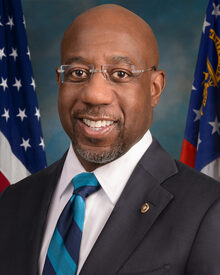
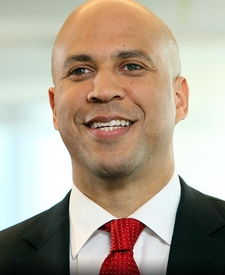
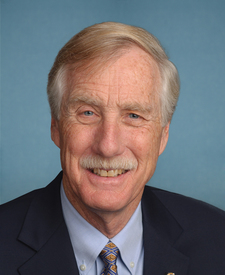
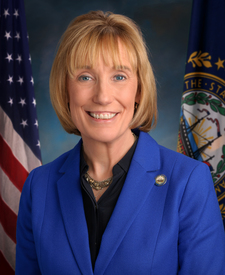
Key players in the Senate
Ranked by swing score, 0–100 · swing-v2Bars show each input from 0 to 100: ideology gap, scorecard gap, . is the seat’s partisan lean, and shows how much of the input data a score has.
Similar past votes, Senate
Earlier behind swing-v3’s inputLoading similar votes
Cosponsors
20 activeShow all 20 cosponsors
- Andy Barr (R-KY-6)
- David Rouzer (R-NC-7)
- Jill N. Tokuda (D-HI-2)
- Monica De La Cruz (R-TX-15)
- Zachary Nunn (R-IA-3)
- John W. Rose (R-TN-6)
- Emanuel Cleaver (D-MO-5)
- Stephen F. Lynch (D-MA-8)
- Brittany Pettersen (D-CO-7)
- Daniel Webster (R-FL-11)
- David Scott (D-GA-13)
- Sharice Davids (D-KS-3)
- Josh Riley (D-NY-19)
- Tracey Mann (R-KS-1)
- Donald G. Davis (D-NC-1)
- Pete Sessions (R-TX-17)
- Kim Schrier (D-WA-8)
- Ron Estes (R-KS-4)
- Derek Schmidt (R-KS-2)
- Jimmy Panetta
How the swing score works
Ideology gapHow far a member’s DW-NOMINATE voting score sits from their party’s median in the same chamber.
Scorecard gapHow far their Heritage Action and LCV ratings stray from their party’s average, using the groups’ votes on similar bills where available.
Cross-pressureHow strongly their district or state leans toward the other party, from our own computed partisan lean.
Similar votesHow often they voted against their own party on earlier roll calls about this bill or similar ones.
Committee bonusMembers of the committees handling the bill decide whether it moves, so they get a boost.
Cosponsor checkThe sponsor and active cosponsors have already committed, so they drop toward entrenched.