Loading bill breakdown…
H.R. 1520119th CongressHealth
Charlotte Woodward Organ Transplant Discrimination Prevention Act
Sponsored by Rep. Kat Cammack (R-FL) · 28 active : 15 Republicans, 13 Democrats
Latest action: Received in the Senate and Read twice and referred to the Committee on Health, Education, Labor, and Pensions.
Where it standsPassed House, now in the Senate7 senators score as swing votes
Passed House
- House: passedJun 23, 2025
- Senate: next
- President: not yet
Summary
, via Congress.govCharlotte Woodward Organ Transplant Discrimination Prevention Act
This bill expressly prohibits health care providers and other entities involved in matching donated organs with recipients from denying or restricting an individual's access to organ transplants solely on the basis of the individual's disability, except in limited circumstances.
Read full summaryHide full summary
Specifically, these entities may consider an individual's disability when making decisions about transplants only if a physician finds, based on an individualized evaluation, that the individual's physical or mental disability is medically significant to the provision of the transplant. A disability shall not be considered medically significant if the individual has an adequate support system in place to comply with transplant-related medical requirements.
These entities must also make reasonable changes to their policies to make transplants and related care more available to individuals with disabilities.
Aggrieved individuals may bring claims of discrimination to the Office of Civil Rights of the Department of Health and Human Services. The bill provides for expedited resolutions of these claims.
In addition, the board of directors of the Organ Procurement and Transplantation Network may not issue policies that prohibit or hinder access to an organ transplant based solely on the individual's disability. This network is a public-private partnership linking professionals involved in the U.S. organ donation and transplantation system.
How the projections held up
Each member’s recorded vote compared with their swing projection from before the vote. A member by voting against most of their own party.
House
Passed by voice vote or unanimous consent: no individual votes recorded.
Committees and subjects
Committees
- House Committee on Energy and Commerce · HouseReported by · Markup by · Referred to
- Senate Committee on Health, Education, Labor, and Pensions · SenateReferred to
Subjects
- Administrative remedies
- Civil actions and liability
- Department of Health and Human Services
- Disability and health-based discrimination
- Organ and tissue donation and transplantation
- Public-private cooperation
How the Senate breaks down
- 7Swing 70–100
- 65Middle 30–70
- 28Entrenched 0–30
Members fall into . All 100 senators have enough data to score.
Key players in the Senate
Ranked by swing score, 0–100 · swing-v2Bars show each input from 0 to 100: ideology gap, scorecard gap, . is the seat’s partisan lean, and shows how much of the input data a score has.
- 1
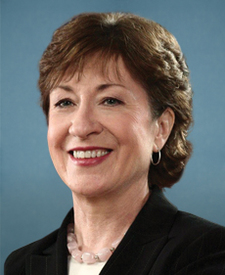 Susan M. CollinsRepublican · Maine · Lean D+4Senate Committee on Health, Education, Labor, and Pensions
Similar past votes, Senate
Earlier behind swing-v3’s inputLoading similar votes
Cosponsors
28 activeShow all 28 cosponsors
- Darrell Issa (R-CA-48)
- Debbie Dingell (D-MI-6)
- Debbie Wasserman Schultz (D-FL-25)
- Pete Sessions (R-TX-17)
- Brian K. Fitzpatrick (R-PA-1)
- Claudia Tenney (R-NY-24)
- Donald G. Davis (D-NC-1)
- Eleanor Holmes Norton (D-DC-AL)
- Mariannette Miller-Meeks (R-IA-1)
- Mary E. Miller (R-IL-15)
- Nanette Diaz Barragán (D-CA-44)
- Paul Tonko (D-NY-20)
- Pete Stauber (R-MN-8)
- Seth Moulton (D-MA-6)
- Celeste Maloy (R-UT-2)
- John H. Rutherford (R-FL-5)
- Steve Cohen (D-TN-9)
- Ashley Hinson (R-IA-2)
- Diana Harshbarger (R-TN-1)
How the swing score works
Ideology gapHow far a member’s DW-NOMINATE voting score sits from their party’s median in the same chamber.
Scorecard gapHow far their Heritage Action and LCV ratings stray from their party’s average, using the groups’ votes on similar bills where available.
Cross-pressureHow strongly their district or state leans toward the other party, from our own computed partisan lean.
Similar votesHow often they voted against their own party on earlier roll calls about this bill or similar ones.
Committee bonusMembers of the committees handling the bill decide whether it moves, so they get a boost.
Cosponsor checkThe sponsor and active cosponsors have already committed, so they drop toward entrenched.