Loading bill breakdown…
H.R. 1493119th CongressHealth
To reauthorize and make improvements to Federal programs relating to the prevention, detection, and treatment of traumatic brain injuries, and for other purposes.
Sponsored by Rep. Frank Pallone (D-NJ) · 6 active : 3 Republicans, 3 Democrats
Latest action: Received in the Senate and Read twice and referred to the Committee on Health, Education, Labor, and Pensions.
Where it standsPassed House, now in the Senate7 senators score as swing votes
Passed House
- House: passedJul 20, 2026
- Senate: next
- President: not yet
Summary
, via Congress.govThis bill reauthorizes from FY2026-FY2030 and expands Department of Health and Human Services (HHS) programs relating to traumatic brain injuries. It also requires HHS to conduct a study and report to Congress on traumatic brain injuries.
Specifically, the bill reauthorizes
Centers for Disease Control and Prevention (CDC) grants to states for traumatic brain injury surveillance and registries (renaming the program after the late Representative Bill Pascrell, Jr.),
CDC research and public awareness activities to reduce traumatic brain injuries,
Read full summaryHide full summary
Administration for Community Living (ACL) grants to states and American Indian consortiums for services and support for individuals living with traumatic brain injuries, and
ACL grants for protection and advocacy agencies supporting individuals with traumatic brain injuries.
Also, the bill generally expands the scope and requirements of these programs, including by requiring the CDC to publish information on populations at higher risk for traumatic brain injuries and strategies for preventing such injuries in these populations.
Additionally, HHS must conduct a study on long-term symptoms or conditions in people who experience traumatic brain injuries and report the findings to Congress. HHS must also submit a report to Congress on populations with a higher risk of traumatic brain injuries and outreach efforts for such populations.
How the projections held up
Each member’s recorded vote compared with their swing projection from before the vote. A member by voting against most of their own party.
House
Passed by voice vote or unanimous consent: no individual votes recorded.
Committees and subjects
Committees
- House Committee on Energy and Commerce · HouseReported by · Markup by · Referred to
- Senate Committee on Health, Education, Labor, and Pensions · SenateReferred to
Subjects
- Congressional oversight
- Data collection, sharing, protection
- Government information and archives
- Government studies and investigations
- Health programs administration and funding
- Health promotion and preventive care
- Intergovernmental relations
- Neurological disorders
- State and local government operations
How the Senate breaks down
- 7Swing 70–100
- 65Middle 30–70
- 28Entrenched 0–30
Members fall into . All 100 senators have enough data to score.
Key players in the Senate
Ranked by swing score, 0–100 · swing-v2Bars show each input from 0 to 100: ideology gap, scorecard gap, . is the seat’s partisan lean, and shows how much of the input data a score has.
- 1
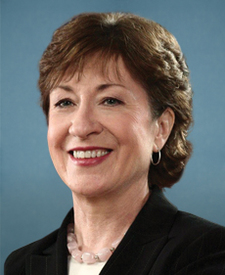 Susan M. CollinsRepublican · Maine · Lean D+4Senate Committee on Health, Education, Labor, and Pensions
Similar past votes, Senate
Earlier behind swing-v3’s inputLoading similar votes
Cosponsors
6 activeShow all 6 cosponsors
- Dan Crenshaw (R-TX-2)
- Don Bacon (R-NE-2)
- Robert Menendez (D-NJ-8)
- Christopher R. Deluzio (D-PA-17)
- John H. Rutherford (R-FL-5)
- Eugene Simon Vindman (D-VA-7)
How the swing score works
Ideology gapHow far a member’s DW-NOMINATE voting score sits from their party’s median in the same chamber.
Scorecard gapHow far their Heritage Action and LCV ratings stray from their party’s average, using the groups’ votes on similar bills where available.
Cross-pressureHow strongly their district or state leans toward the other party, from our own computed partisan lean.
Similar votesHow often they voted against their own party on earlier roll calls about this bill or similar ones.
Committee bonusMembers of the committees handling the bill decide whether it moves, so they get a boost.
Cosponsor checkThe sponsor and active cosponsors have already committed, so they drop toward entrenched.