Loading bill breakdown…
H.R. 1048119th CongressEducation
DETERRENT Act
Sponsored by Rep. Michael Baumgartner (R-WA) · 21 active : 18 Republicans, 2 Democrats, 1 Independent
Latest action: Received in the Senate and Read twice and referred to the Committee on Health, Education, Labor, and Pensions.
Where it standsPassed House, now in the Senate7 senators score as swing votes
Passed House
- House: passedMar 27, 2025
- Senate: next
- President: not yet
Summary
, via Congress.govDefending Education Transparency and Ending Rogue Regimes Engaging in Nefarious Transactions Act or the DETERRENT Act
This bill expands oversight and disclosure requirements related to foreign sources and institutions of higher education (IHEs).
Specifically, the bill requires an IHE to annually disclose to the Department of Education (ED) any year in which the IHE
receives a gift from a foreign country of concern (e.g., China or Russia) or foreign entity of concern of any dollar amount;
Read full summaryHide full summary
receives a gift or contract from a foreign source (other than a foreign country of concern or foreign entity of concern) that is valued at $50,000 or more, considered alone or in combination with all other gifts or contracts within a calendar year (current disclosure threshold is $250,000 or more), or which has an undetermined monetary value;
enters into a contract with a foreign country of concern or foreign entity of concern after receiving a waiver for such contract; or
is substantially controlled by a foreign source.
Additionally, the bill
prohibits IHEs from entering into contracts with a foreign country of concern or with a foreign entity of concern without obtaining a waiver,
requires certain IHEs to disclose gifts or contracts between covered individuals (e.g., researchers) and foreign sources, and
requires private IHEs with specified assets or investments to file annual investment disclosure reports.
The bill requires ED to investigate possible violations of this bill and outlines the various penalties for each violation. Penalties may include losing eligibility for federal student financial aid.
How the projections held up
Each member’s recorded vote compared with their swing projection from before the vote. A member by voting against most of their own party.
House
On PassagePassed241 yea, 169 nayMarch 27, 2025 · Roll call 83
| BandBand before the vote | VotedVoted yea or nay | BrokeBroke with party | Share |
|---|---|---|---|
| Swing | 29 | 15 | 52% |
| Middle | 185 | 8 | 4% |
| Entrenched | 188 | 9 | 5% |
| All |
Committees and subjects
Committees
- House Committee on Education and Workforce · HouseReported by · Markup by · Referred to
- Senate Committee on Health, Education, Labor, and Pensions · SenateReferred to
Subjects
- Civil actions and liability
- Congressional oversight
- Contracts and agency
- Education programs funding
- Financial services and investments
- Government information and archives
- Government studies and investigations
- Higher education
- Subversive activities
- Teaching, teachers, curricula
How the Senate breaks down
- 7Swing 70–100
- 65Middle 30–70
- 28Entrenched 0–30
Members fall into . All 100 senators have enough data to score.
Key players in the Senate
Ranked by swing score, 0–100 · swing-v2Bars show each input from 0 to 100: ideology gap, scorecard gap, . is the seat’s partisan lean, and shows how much of the input data a score has.
- 1
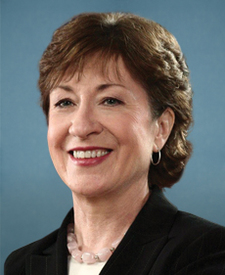 Susan M. CollinsRepublican · Maine · Lean D+4Senate Committee on Health, Education, Labor, and Pensions
Similar past votes, Senate
Earlier behind swing-v3’s inputLoading similar votes
Cosponsors
21 activeShow all 21 cosponsors
- Burgess Owens (R-UT-4)
- Glenn Grothman (R-WI-6)
- Joe Wilson (R-SC-2)
- Kevin Kiley (I-CA-3)
- Mark B. Messmer (R-IN-8)
- Michael A. Rulli (R-OH-6)
- Rick W. Allen (R-GA-12)
- Tim Walberg (R-MI-5)
- Virginia Foxx (R-NC-5)
- Claudia Tenney (R-NY-24)
- Glenn Thompson (R-PA-15)
- Robert F. Onder (R-MO-3)
- Randy K. Sr. Weber (R-TX-14)
- Andy Barr (R-KY-6)
- Erin Houchin (R-IN-9)
- Aaron Bean (R-FL-4)
- Donald G. Davis (D-NC-1)
- Brad Finstad (R-MN-1)
- Marie Gluesenkamp Perez (D-WA-3)
- John James
How the swing score works
Ideology gapHow far a member’s DW-NOMINATE voting score sits from their party’s median in the same chamber.
Scorecard gapHow far their Heritage Action and LCV ratings stray from their party’s average, using the groups’ votes on similar bills where available.
Cross-pressureHow strongly their district or state leans toward the other party, from our own computed partisan lean.
Similar votesHow often they voted against their own party on earlier roll calls about this bill or similar ones.
Committee bonusMembers of the committees handling the bill decide whether it moves, so they get a boost.
Cosponsor checkThe sponsor and active cosponsors have already committed, so they drop toward entrenched.