Loading bill breakdown…
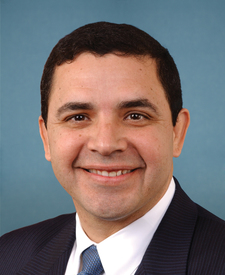
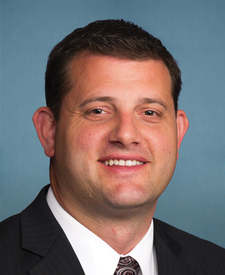
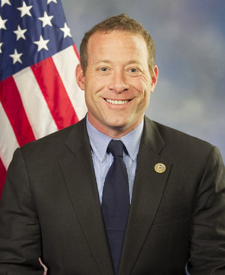
Sponsored by Rep. J. Luis Correa (D-CA) · 2 active : 1 Republican, 1 Democrat
Latest action: Received in the Senate and Read twice and referred to the Committee on Homeland Security and Governmental Affairs.
Emerging Innovative Border Technologies Act
This bill requires U.S. Customs and Border Protection (CBP) and the Science and Technology Directorate of the Department of Homeland Security to develop a plan to identify, integrate, and deploy emerging and innovative technologies to improve border security operations. Such technologies may incorporate artificial intelligence, machine-learning, automation, fiber-optic sensing technology, nanotechnology, optical and cognitive radar, modeling and simulation technology, hyperspectral and LIDAR sensors, and imaging, identification, and categorization systems.
The bill authorizes CBP to establish one or more Innovation Teams to research and adapt commercial technologies that may be used by CBP.
The plan must describe how the Innovation Teams have been implemented and also detail
goals and timelines for adoption of qualifying technologies,
metrics and key performance parameters for determining the plan's effectiveness,
which technologies used by other federal agencies CBP may also utilize,
which existing authorities CBP may use to procure technologies,
how CBP legacy border technology programs may be replaced,
the expected privacy and security impact of security-related technology on border communities, and
recent technological advancements in specified technologies.
CBP must provide the plan to Congress within 180 days of the bill’s enactment. The bill also requires CBP to annually report to Congress regarding the activities of the Innovation Teams.
Each member’s recorded vote compared with their swing projection from before the vote. A member by voting against most of their own party.
| BandBand before the vote | VotedVoted yea or nay | BrokeBroke with party | Share |
|---|---|---|---|
| Swing | 35 | 0 | 0% |
| Middle | 175 | 3 | 2% |
| Entrenched | 197 | 6 | 3% |
| All |
Members fall into . 2 representatives don’t have enough data yet and are marked “insufficient data”. Non-voting delegates are not counted. The bill is not before the House right now; these scores show where members would stand.
: only movement toward the other party counts, so members who sit further from the center than their party no longer score as swing votes.
Bars show each input from 0 to 100: ideology gap, scorecard gap, . is the seat’s partisan lean, and shows how much of the input data a score has.
Loading similar votes
| 407 |
| 9 |
| 2% |
: Pair any member who broke with one who stayed with their party: in 35% of those pairs, the one who broke had the higher swing score before the vote. Chance would be 50%.
Projections from swing-v2-dir, computed with data from before the vote. Present and not voting never count as breaking.
These members have less than half of the model’s inputs, so their scores are not banded or ranked.


Ringed dots broke with their party on the vote.
Ideology is each member’s score. The cluster low on the chart includes the bill’s 3 sponsor and cosponsors in the House: they have already committed, so they score as entrenched. 2 representatives without a DW-NOMINATE score or with insufficient data are not plotted.
Similar votes count toward swing-v3 in the House: total similarity weight 17.0 (needs 5.0).